




Brake fade is what happens when your brakes stop working, not because something broke, but because heat has overwhelmed the system. You push the pedal and the car takes forever to slow down. Or the pedal drops toward the floor when you expect it to be firm. It’s one of the most unsettling things a driver can experience, and it happens fast.
The good news: it’s almost entirely preventable if you understand what causes it and set your brakes up for the kind of driving you actually do.
There Are Two Types of Brake Fade, and They’re Different Problems
Most people use “brake fade” as a catch-all term, but there are two distinct failure modes with different causes and different solutions. Understanding which one you’re dealing with matters.
Pad Fade
Pad fade is a friction problem. Your brake pads work by pressing against the rotor and converting kinetic energy into heat through friction. That works great right up until the friction material itself gets so hot it can’t do its job anymore.
Every brake pad compound has a temperature ceiling. Push past it and the organic binders in the pad begin to break down and outgas. That gas creates a thin film between the pad surface and the rotor, essentially acting as a lubricant. You’re still pressing the pad against the rotor, but there’s nothing for it to grip. The car slows down much less than it should.
What pad fade feels like: the pedal still feels firm and builds pressure, but the car just doesn’t slow down the way it should. You’re applying the same force you always do, but the stopping distance has stretched out.
Fluid Fade (Vapor Lock)
Fluid fade is a hydraulic problem. Your brake fluid transfers force from your foot on the pedal to the calipers at each wheel. It does this because liquids are incompressible. Push on one end of a sealed fluid line and that force transmits directly to the other end.
Here’s the problem: brake fluid boils. And when it boils, it turns into a gas. Gases compress. Push on a brake pedal and instead of that force going straight to the caliper, it compresses a pocket of vapor in the line. The pedal goes to the floor and almost nothing happens.
Fluid fade happens when brake components get hot enough to transfer that heat into the fluid itself. It’s accelerated by old, moisture-contaminated fluid, which has a much lower boiling point than fresh fluid.
What fluid fade feels like: the pedal sinks to the floor with almost no resistance. This is far more alarming than pad fade and more dangerous because there’s almost no stopping power left.
Who’s Actually at Risk?
For most daily drivers doing normal city and highway driving, brake fade is a non-issue. The brakes cool down between stops and never get close to their thermal limits. But certain driving patterns push heat into the system fast:
Mountain and canyon driving. Long descents with repeated heavy braking are a perfect recipe for brake fade. Each braking event loads heat into the rotors and pads. If the next stop comes before that heat dissipates, the system keeps getting hotter. By the bottom of a long grade, some drivers are deep into fade territory, especially those who ride the brakes instead of using engine braking.
Track days and performance driving. Repeated hard stops from high speeds generate enormous heat loads. Street pads are not designed for repeated 100-0 mph stops with two-minute cool-down intervals.
Towing and hauling. A loaded truck or trailer significantly increases stopping distances and heat generation. The extra weight requires more braking force, which means more friction, which means more heat. If you’re regularly towing near your vehicle’s capacity, your factory brakes may not have enough thermal headroom.
Repeated emergency stops. Even in normal driving, a situation requiring multiple hard stops in quick succession can push an underspec’d system into early fade.
How to Prevent Brake Fade: Build for Your Application
The fix for brake fade is matching your brake system to the heat loads your driving actually generates. This isn’t about buying the most expensive parts. It’s about choosing the right parts for how you drive.
Start with the Right Pad Compound
Pad compound is the single biggest factor in fade resistance. The friction material determines both when the pad starts to fade and how gracefully it degrades under heat.
Organic pads are the softest and quietest option. They work well for light daily driving but have the lowest temperature ceiling. They’re not the right call for mountain driving or any track use.
Semi-metallic pads run hotter before fading and offer better bite under heat. They’re the right choice for towing, mountain driving, and spirited street use.
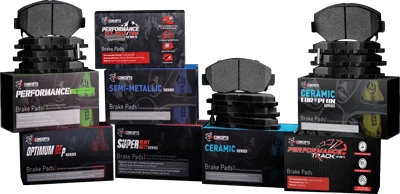
Ceramic pads (like the R1 CERAMIC Series) have excellent fade resistance for street driving, produce minimal dust, and are gentler on rotors. They’re a solid all-around upgrade for anyone who wants better performance without giving up street manners. Our full pad compound breakdown goes deeper on the tradeoffs between each type.
For serious track applications, look at the R1 PERFORMANCE Track compound. It’s engineered for high-heat, repeated-stop scenarios that would destroy a street pad quickly.
Upgrade Your Rotors for Better Heat Management
Rotor design directly affects how fast heat builds up and how quickly it dissipates. A thicker, properly ventilated rotor holds more thermal mass and can absorb more heat before reaching critical temperatures.
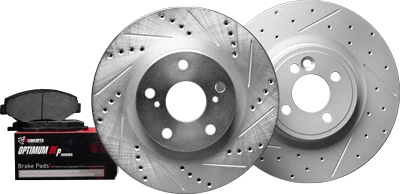
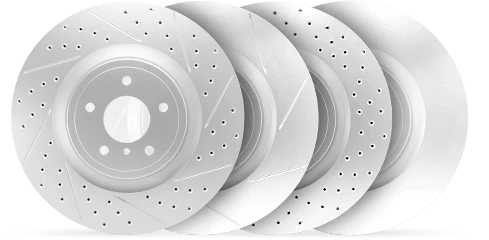
Slotted rotors channel heat away from the pad face and help sweep off gas buildup — the same gas that causes pad fade. The R1 eLine Drilled and Slotted Rotors combine drilled and slotted features, making them a strong choice for drivers who see occasional spirited use or light track days. Here’s a detailed comparison of drilled vs. slotted designs if you want to dig into the geometry.
Use High-Temperature Brake Fluid
This one’s often overlooked. Brake fluid has two boiling points: dry (fresh fluid) and wet (fluid that’s absorbed moisture). Even if you’re running track-spec pads and upgraded rotors, stock brake fluid with two or three years of moisture absorption may have a wet boiling point well within range of what a hot caliper can transfer.
DOT 5.1 fluid has a dry boiling point of at least 500 degrees F and maintains a much higher wet boiling point than DOT 3 or standard DOT 4. For any high-heat driving scenario, fresh fluid (and ideally high-spec fluid) is cheap insurance against vapor lock. Our brake fluid guide covers the specs you need to know.
Bed Your Pads and Rotors Properly
New pads need to be bedded through a specific heat-cycling protocol that transfers an even layer of friction material onto the rotor surface. Skip this and you get uneven pad deposits, inconsistent bite, and premature fade. Follow the bed-in procedure here.
If You Drive on Track, This Needs to Be Its Own Conversation
Track driving puts loads on brakes that are completely outside the design envelope of any street-spec part. Even a spirited autocross event can overheat stock pads in a handful of runs. A full track day with repeated high-speed braking zones will destroy most street equipment.
For track use, you want purpose-built compounds with a high operating temperature range, fresh high-temp fluid before every event, and ideally brake ducting to pull cool air into the caliper. Our track day brake setup guide walks through everything you need to think about before you go out.
Recovering from Brake Fade: What to Do In the Moment
If you feel fade developing — longer stopping distances, pedal going soft — the immediate goal is getting heat out of the system.
Pad fade recovery: Reduce your braking loads. If you’re descending a mountain, downshift and use engine braking to take load off the pads. Get off the brakes and let them cool. Avoid coming to a full stop if you can. Hot pads sitting against a stationary rotor can leave uneven deposits and make the fade worse. Keep rolling slowly until you can feel bite returning.
Fluid fade recovery: If the pedal has gone to the floor, you have very little stopping power available. Pump the pedal rapidly to try to build any remaining pressure. Use the parking/emergency brake for additional stopping force if needed. Get off the road safely and do not continue driving until the system has cooled completely and you’ve identified why the fluid overheated.
After any significant fade event, let everything cool down for at least 30-45 minutes before driving. If you experienced fluid fade, replace the fluid before driving again.
The Pattern Behind Brake Fade Prevention
Fade isn’t random. It follows the same pattern every time. A brake system that’s underspec’d for the heat load eventually gets overwhelmed. The solution is always the same: match the system to the application.
Street driver who never pushes it? Your stock setup is probably fine with fresh fluid and quality pads on the next replacement. Canyon driver, trailer puller, or anyone who sees performance driving? Step up your pad compound, consider upgraded rotors, and stay on top of your fluid changes.
Browse the R1 Concepts brake kit options to find a matched pad-and-rotor setup built for your driving profile, or shop pads and rotors individually if you know exactly what you need.