




A brake pedal should feel firm and progressive. You press it, resistance builds, the car slows. That firmness is hydraulic pressure doing exactly what it’s supposed to do.
A spongy pedal feels completely different. You press it and instead of firm resistance you get a mushy, compressible feeling, like you’re pressing on a balloon instead of a solid hydraulic system. The pedal might travel farther than usual before the brakes engage. In bad cases, it sinks toward the floor with steady pressure.
This is not a “monitor it and see” situation. A spongy brake pedal is a hydraulic system problem, and the hydraulic system is the core of how your car stops. Here’s what causes it, how to tell which problem you’re dealing with, and what to do about it.
Why Pedal Feel Matters: How Brake Hydraulics Work
Brakes are a hydraulic system. When you press the pedal, you’re moving a piston inside the master cylinder, which pushes brake fluid through steel lines and flexible hoses to the caliper pistons at each wheel. The caliper pistons push the pads against the rotor, and friction slows the car.
Hydraulic fluid is essentially incompressible. That’s the whole point. Fluid transmits force perfectly. When you press the pedal, the force goes directly to the calipers with no loss, which is why a healthy pedal feels solid.
Gas is compressible. Air pockets, steam bubbles, vapor: all of it compresses instead of transmitting force. When compressible material gets into a hydraulic system, you lose the direct force transmission, and the pedal gets soft.
That’s the core issue behind most spongy pedal complaints: something compressible has gotten into the hydraulic circuit.
Cause 1: Air in the Brake Lines
Air in the system is the most common cause of a spongy pedal and the one most mechanics reach for first. Air gets in during brake service (anytime you open a brake line, caliper bleed screw, or master cylinder reservoir, there’s an opportunity for air to enter), from a low fluid reservoir that sucked air into the circuit, or from a small leak that’s been losing fluid and pulling air in as the level drops.
How to identify it: The spongy feel is consistent. Pumping the pedal several times can temporarily firm it up as you build pressure. This pump-to-firm behavior is a classic air-in-lines sign.
DIY or shop? Bleeding the brakes is a DIY-friendly job if you have a helper or a one-person bleeding kit. The basic process involves opening each bleed screw in sequence (typically starting at the wheel farthest from the master cylinder), pushing fluid through until no bubbles appear, then closing and moving to the next. The key is keeping the master cylinder reservoir topped off during the entire process. Don’t let it run dry or you’ll suck more air in.
Cost to fix: Just brake fluid if DIY. $80-150 at a shop for a full system bleed.
Cause 2: Brake Fluid Boiling (Vapor Lock)
This one is less common in everyday driving but shows up on the track, on mountain passes with sustained heavy braking, or in any situation where you’ve pushed the brakes harder than normal for longer than usual.
Brake fluid has a boiling point. OEM fluid (typically DOT 3 or DOT 4) has a dry boiling point above 400 degrees F. But brake fluid is hygroscopic, meaning it absorbs moisture from the air over time. Absorbed moisture lowers the boiling point significantly. Old, contaminated brake fluid can boil at temperatures you’d hit on a long downhill run.
When brake fluid boils, it creates vapor bubbles in the lines. Like air, vapor is compressible. Suddenly you’re pressing the pedal and compressing steam instead of transmitting force.
How to identify it: The spongy pedal developed after sustained hard braking. It’s often described as “fade”: the pedal gets progressively worse during a hard session and may feel normal again once everything cools down. Repeated instances of this are a sign the fluid is degraded and overheating.
DIY or shop? Fully DIY. The solution is a complete brake fluid flush: drain the old fluid and replace with fresh fluid from a sealed container. DOT 4 is generally recommended over DOT 3 for better heat resistance. For track or spirited driving, DOT 5.1 (not DOT 5 silicone) offers a significantly higher boiling point.
Our post on brake fluid types explains the different specs and which one to use for your application.
Cost to fix: $10-20 for a bottle of quality brake fluid if DIY. $80-120 at a shop for a full flush and fill.
Prevention: After any session involving extended hard braking (a track day, a mountain descent, towing on grades) let the brakes cool with the vehicle moving slowly before parking. Don’t hold the pads against hot rotors during the cooling period. And keep up with fluid replacement on a regular schedule.
Cause 3: Worn or Failing Master Cylinder
The master cylinder is the hydraulic heart of your brake system. It converts your pedal input into hydraulic pressure. Inside it are rubber seals that maintain pressure in the circuit. When those seals wear out, fluid starts bypassing them internally. You press the pedal, pressure builds briefly, and then bleeds past the worn seal rather than staying in the system.
How to identify it: The classic master cylinder failure symptom is a pedal that slowly sinks to the floor under steady pressure. You press and hold, and the pedal gradually travels down even though you’re not releasing it. There’s no external fluid leak. The fluid isn’t going anywhere visible. It’s bypassing internally.
Another sign: you can pump the pedal back up to normal feel, but it sinks again when held. This distinguishes it from air in the lines (which firms up and stays firm after pumping) versus a master cylinder seal issue (which sinks again immediately).
DIY or shop? Master cylinder replacement is a job that most experienced DIYers can handle, but it’s more involved than bleeding lines. If you’re not experienced with brake system repairs, this one is worth having a shop handle.
Cost to fix: Master cylinder parts run $50-200 depending on vehicle. Shop labor adds another $100-200, making the total repair $150-400 in most cases.
Cause 4: Moisture-Contaminated Brake Fluid
This is related to the vapor lock scenario but worth separating because the symptoms are slightly different and the timeline is different. Vapor lock tends to happen acutely during a hard driving event. Moisture contamination is a slow, gradual problem that builds over years.
As brake fluid absorbs moisture, it not only lowers the boiling point but also becomes corrosive to the system components over time. Contaminated fluid can degrade caliper seals, master cylinder seals, and the rubber hoses in the system. A brake hose that has started to deteriorate internally can actually collapse and cause weird pressure issues.
How to identify it: There’s no single dramatic symptom. It shows up as gradually degrading pedal feel over months or years. The most reliable indicator is a fluid color check: fresh brake fluid is clear to light yellow. Dark, brownish, or cloudy fluid is overdue for replacement.
DIY or shop? The fix (a complete fluid flush) is fully DIY-able.
Cost to fix: Same as the vapor lock fix for the fluid flush itself. If hoses or caliper seals are compromised, add $100-300 per corner depending on which components need service.
Cause 5: Caliper Piston Seal Issue
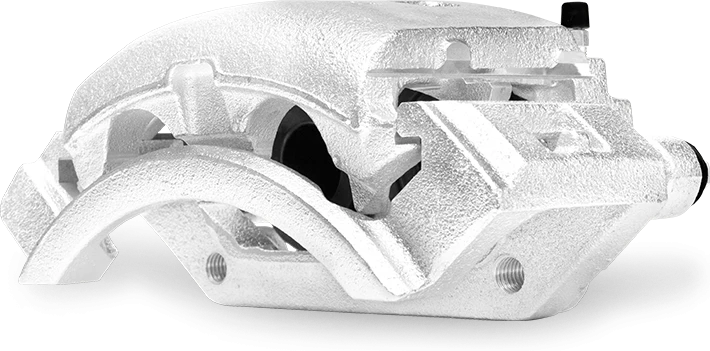
Each caliper has one or more pistons with rubber seals that keep fluid in the caliper and allow the piston to extend and retract properly. If a seal tears or degrades, fluid can leak past it. You lose system pressure, the caliper may not retract properly, and the pedal can go soft.
How to identify it: You may notice brake fluid seeping around a caliper. Look at the back face of the caliper behind the rotor, and check for wet or stained areas. You might also notice the brakes pulling to one side. The fluid reservoir level will be dropping if you’re losing fluid through a leak.
DIY or shop? Caliper seal rebuilds are technically DIY-able but require care. Caliper replacement (versus rebuild) is the more reliable path for most people, and on high-mileage calipers it’s usually the right call.
Cost to fix: $150-350 per corner for caliper replacement including labor.
Friction vs Hydraulic: Not All Soft Pedal is Hydraulic
One quick clarification worth making: a pedal that feels like it requires more pressure to stop the car but doesn’t have that mushy, compressible quality is a different problem. Glazed pads, wrong friction material for the application, or pads that have never been properly bedded in can all produce that sensation.
True spongy feel (where the pedal compresses instead of feeling solid) is a hydraulic issue. Pads that require lots of pressure to slow the car but feel firm at the pedal are a friction issue.
Browse replacement brake pads at r1concepts.com/brake-pads if you’re dealing with the friction side of the equation.
How to Diagnose the Cause: A Simple Test Sequence
If you’re trying to figure out which problem you’re dealing with, work through this in order:
Step 1: Check the fluid reservoir. Open the hood and find the master cylinder reservoir. Is the fluid level low? If yes, you’re losing fluid somewhere. Top it off to the max line for testing, but find the source.
Step 2: Check the fluid color. Fresh DOT 3/4 is nearly clear to very light yellow. Dark, brown, or cloudy fluid is overdue for replacement.
Step 3: Pump the pedal test. Pump the pedal five to six times rapidly. Does it firm up? If the pedal firms up significantly with pumping, air in the system is likely. If it firms up and then sinks back down under sustained pressure, master cylinder seals are suspect.
Step 4: Visual inspection. With a flashlight, look at all four calipers and the brake lines you can see for any signs of fluid seepage.
Step 5: Check for a recent brake job. Did the pedal go soft after someone worked on the brakes? Air introduced during the job is almost certainly the cause.
When to Not Drive at All
A spongy brake pedal is not a “drive it until the appointment” problem. It’s a “don’t drive it until it’s fixed” problem.
Spongy pedal symptoms tend to get progressively worse, not better. A small amount of air in the system today can become a pedal-to-the-floor situation tomorrow. A marginal master cylinder seal can go from “pedal sinks slowly” to “no hydraulic pressure” faster than you’d expect.
If your pedal feels noticeably different from normal, treat it as an emergency repair. The cost of a brake fluid flush or a bleed is trivial compared to a collision caused by brakes that couldn’t stop the car.
Summary
A soft or spongy brake pedal always traces back to something compressible in a hydraulic system that should have none. The five main causes are:
- Air in the brake lines: most common, usually from service or a slow leak, fix with a bleed
- Brake fluid boiling: from heat, usually after sustained hard braking, fix with a flush and better fluid
- Worn master cylinder: internal seal bypass, pedal sinks under sustained pressure, needs master cylinder replacement
- Moisture-contaminated fluid: slow-developing problem, fix with regular fluid flushes every 2-3 years
- Caliper piston seal failure: look for external leaks, fix with caliper rebuild or replacement
The pump-to-firm test helps distinguish air (firms up, stays firm) from master cylinder issues (firms up, sinks again). Visible leaks point toward the caliper. Recent brake work points toward air introduction.
Don’t drive on a spongy pedal. Get it diagnosed and fixed before your next drive.