



Brake pads create the friction your vehicle needs to slow safely and stop during everyday driving. Choosing the right set depends on your vehicle, habits, road conditions, and regular braking temperatures.
What Type of Brake Pads Do I Need for My Car?
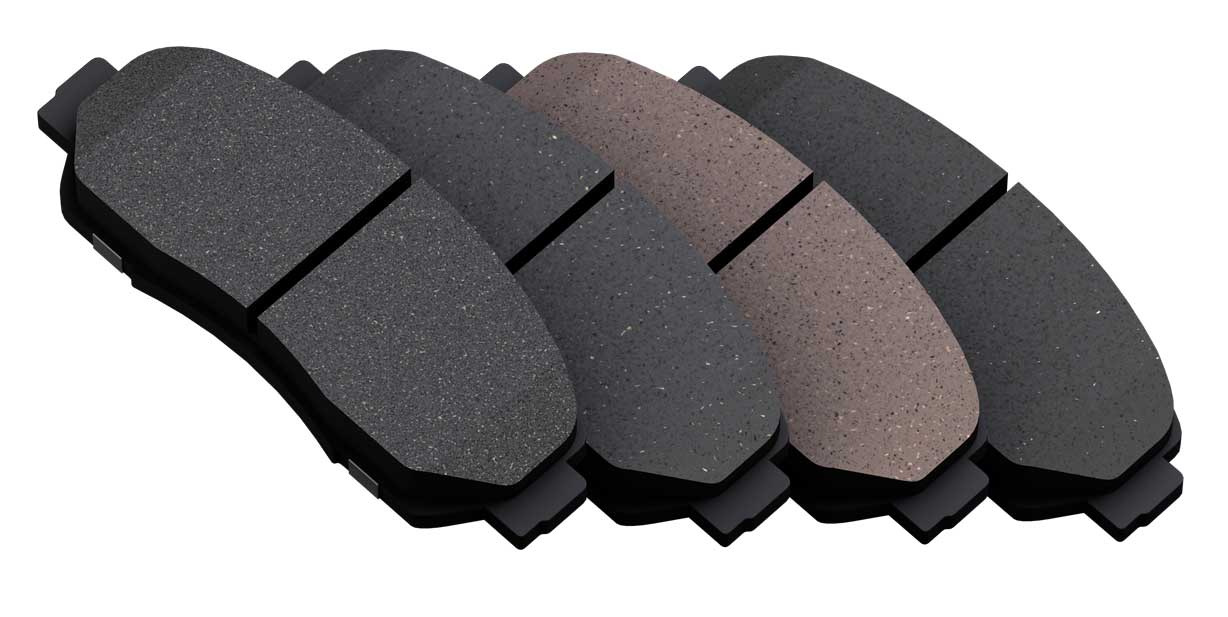
Brake pads commonly use organic, semi metallic, carbon metallic, or ceramic friction materials for different driving demands. Each compound behaves differently under heat, repeated braking, daily traffic, and heavier vehicle loads over time. Organic pads suit lighter everyday driving where quiet operation and smooth braking matter most to you. Semi metallic pads handle more heat, while ceramic pads balance low dust, quiet operation, and durability.
For heavier vehicles, towing, rough terrain, or repeated hard braking, more heat-resistant compounds can make sense. R1 PERFORMANCE Off-Road/Tow Series Brake Pads are intended for these more demanding driving conditions and vehicle uses.
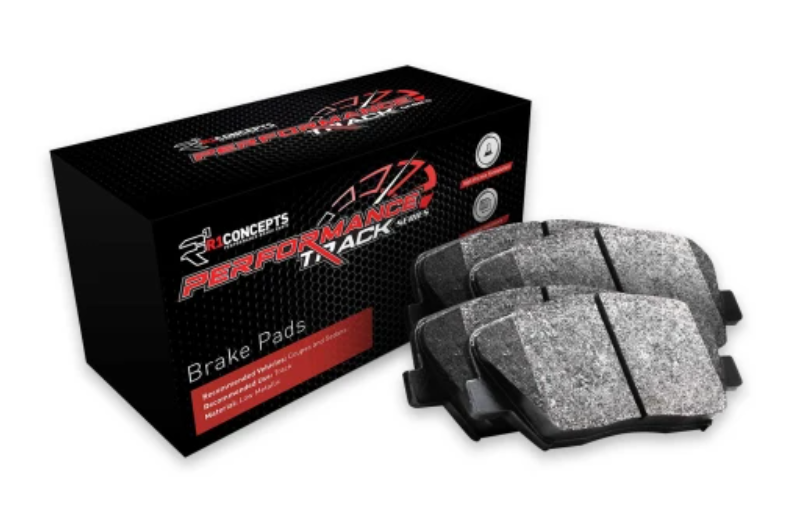
Drivers focused on spirited or performance driving can consider R1 PERFORMANCE Sport Series Brake Pads for stronger performance. Their higher-friction formulation suits situations involving frequent, heavier braking rather than ordinary low-demand commuting and relaxed driving. R1 CERAMIC Series Brake Pads are another option you can consider for everyday passenger vehicles and commuting. Ceramic pads generally produce less dust and noise while handling higher temperatures, though they usually cost more.
Brake Pad Materials and Their Advantages and Disadvantages
Organic brake pads use materials such as rubber, glass, resins, and Kevlar within their friction compound. They were developed as a non-asbestos alternative and are commonly found on many everyday passenger vehicles.
Advantages:
- Quiet during normal braking
- Smooth pedal feel
- Well suited to everyday city driving
Disadvantages:
- Wear faster than some other compounds
- Can create more brake dust
- Less suited to high-performance or heavy-duty use
Semi metallic pads combine steel, copper, iron, graphite, and other fillers within their durable friction material. Their metal content handles heat well, which can suit heavier vehicles and more demanding driving conditions.
Advantages:
- Good durability
- Strong heat dissipation
- Suitable for heavier vehicles and performance driving
Disadvantages:
- Can be noisier, especially when cold
- Produce more brake dust
- May increase rotor wear
Carbon metallic pads combine carbon with metallic fibers for demanding conditions where heat resistance and friction matter. You can consider them when repeated heavy braking places greater thermal demands on your braking system.
Advantages:
- Strong heat resistance
- Durable under demanding use
- Strong stopping performance
- Suited to performance driving, racing, and heavy-duty towing
Disadvantages:
- Produce considerable brake dust
- Can be noisy, especially when cold
- May increase rotor wear and maintenance costs
Ceramic pads use ceramic fibers and other non-metallic materials within their specialized friction compounds for braking. They generally run quietly, create less visible dust, and hold up well at higher brake temperatures.
Advantages:
- Quiet, including when cold
- Produce less brake dust
- Good heat resistance and durability
Disadvantages:
- More expensive than several alternatives
- Require a longer break-in period
- May provide less initial bite than carbon metallic pads
- Not intended for extreme high-performance or heavy-duty towing
- Can be less effective in extreme low-temperature conditions
Your driving pattern matters more than choosing one material simply because it sounds more performance focused. Daily commuting, towing, vehicle weight, temperature, performance use, and noise preferences should shape your final decision.
How Do Brake Pads Work?
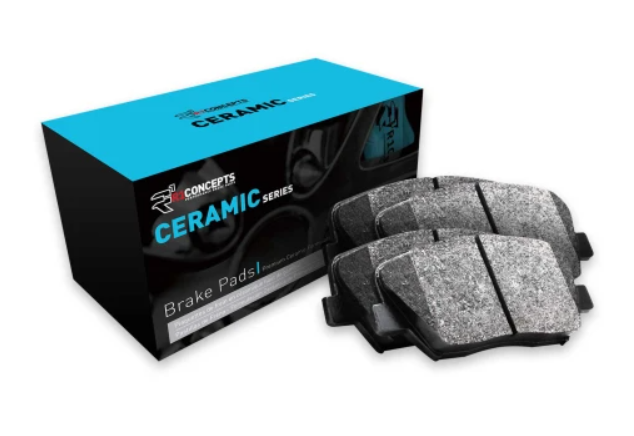
Pressing your brake pedal creates hydraulic pressure throughout the braking system when you need to slow down. The caliper uses that pressure to squeeze your brake pads firmly against the rotating brake rotor. Friction between your pads and rotor converts the vehicle’s motion into heat during every braking event. Repeated braking creates considerable temperature, so friction materials must tolerate heat while wearing at controlled rates.
As friction material wears, your brake pads eventually reach the point where replacement becomes necessary for performance. Many pads include wear indicators contacting the rotor and creating high-pitched squealing near their replacement point.
Parts of a Brake Pad
A brake pad contains several individual parts working together whenever you slow or stop your vehicle.
- Friction material: This surface contacts the rotor. It may contain metallic fibers, resin, ceramic material, or other fillers and gradually wears during use.
- Backing plate: The steel plate supports the friction material and provides the pad’s structural base.
- Adhesive: High-temperature adhesive bonds the friction material to the backing plate.
- Shim: A thin layer between brake pad components can reduce braking noise and vibration. Shims may use rubber, steel, or composite materials.
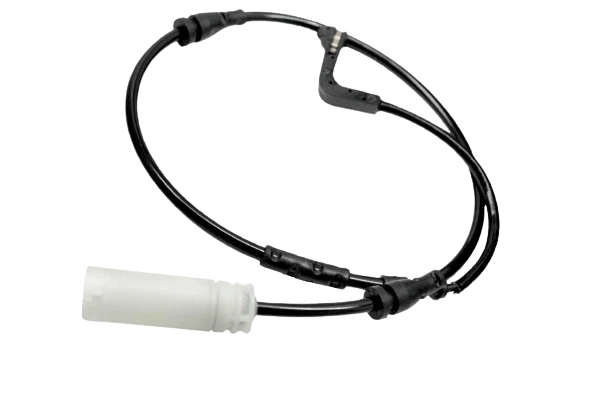
- Wear sensor: Some pads use a metal indicator or sensor that alerts you once the friction material reaches its replacement point.
How Do I Know Which Brakes to Get for My Car?
Start with your owner’s manual and confirm the brake pad specifications required for your particular vehicle application. Proper fitment comes before differences involving compound, dust level, braking noise, or your preferred driving style. Next, consider how you normally use your vehicle and the braking demands it experiences each day. Frequent traffic, towing, heavy loads, and harder braking expose pads to greater heat than relaxed driving.
Ceramic pads may suit you when low dust, quiet operation, and durability are important everyday priorities. Semi metallic pads provide strong braking and heat handling, although they can create additional dust and noise. Organic pads are generally softer and affordable, although they tend to wear more quickly during regular use. Performance-oriented compounds better match vehicles that repeatedly experience heavier braking loads and elevated operating temperatures.
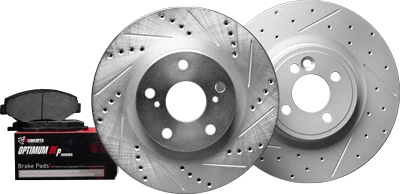
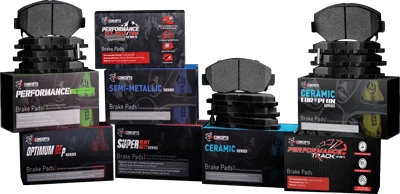
Our brake pad choices include R1 OPTIMUM OEp, CERAMIC, CERAMIC European, PERFORMANCE Sport, and Off-Road/Tow Series products.
Vehicle compatibility still matters regardless of compound, driving style, performance expectations, or your preferred brake characteristics. Match pads to your exact vehicle application before comparing the characteristics offered by each available series.
When Should Brake Pads Be Replaced?
Noise is one common warning that can indicate your brake pads are approaching their replacement point. High-pitched squealing can come from wear indicators, while grinding may signal considerably more advanced friction-material wear. Changes at your brake pedal also deserve attention because vibration or pulsation can indicate inconsistent braking contact. Those sensations can also point toward rotor or braking-system problems that should receive further diagnosis promptly.
Your brake pads should receive inspection during routine maintenance according to vehicle and brake system recommendations. Many manufacturers recommend checks every 10,000 to 20,000 miles, depending on driving habits and pad type. A commonly cited replacement range is approximately 25,000 to 70,000 miles for many passenger vehicle applications. Actual pad life depends heavily on traffic, vehicle weight, driving style, brake material, and operating conditions.
Brake Shoes vs. Brake Pads
Brake pads operate within disc brake systems where calipers press them directly against rotating brake rotors. This friction between the pad and rotor provides the braking force needed to slow your vehicle. Brake shoes work inside drum brake systems rather than against the exposed surface of a rotor. Instead of squeezing a disc, the shoes press against the brake drum’s internal friction surface.
Brake shoes provide a larger contact area and can deliver consistent braking performance over extended periods. Drum systems can retain more heat, however, which may increase fade during repeated heavy braking situations.
Disc brake pads generally work effectively in wet conditions and use an exposed rotor-based braking design. Their exposed rotor arrangement also manages braking heat differently from the enclosed design of drum assemblies.
Risks of Driving With Worn Brake Pads
Worn brake pads reduce the usable friction material available whenever you need to slow your vehicle. As wear progresses, your stopping distances may increase while braking performance can become noticeably less predictable.
Continuing to drive after severe pad wear can damage your brake rotors and increase repair needs. Calipers and other brake components may also be affected when heavily worn pads remain in service. Noise and vibration can provide early warning signs when your brake pads or related components need attention. Squealing, grinding, pedal pulsation, or changed braking feel should prompt inspection instead of continued unchecked driving.
Brake Pad Diagnosis and Troubleshooting
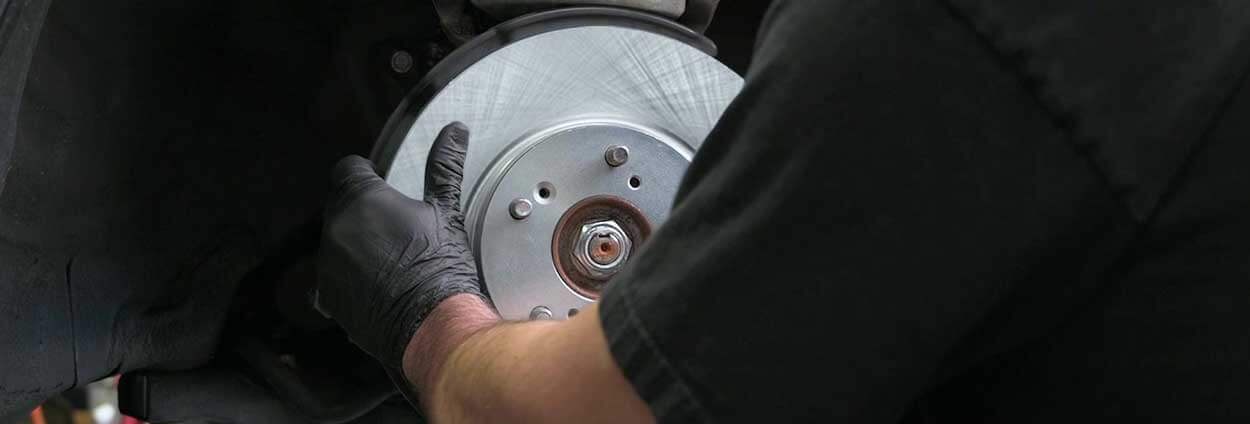
Different symptoms can point toward different brake problems affecting how your vehicle feels while braking.
- Squeaking or squealing: A wear indicator may be contacting the rotor as the pad approaches its replacement point.
- Grinding: The friction material may be worn away enough for metal components to contact the rotor.
- Vibration or pulsation: Uneven pad deposits, uneven rotor thickness, or contamination between the rotor and hub can create changing brake force as the wheel rotates.
- Pulling: A stuck caliper or uneven pad wear can make the vehicle pull to one side during braking.
- Soft pedal: Air in the brake lines, worn components, or a master cylinder problem can change pedal feel.
- Warning lights: A brake warning light may point to low brake fluid, a sensor problem, or another fault in the braking system.
Rotors do not normally bend simply because your brakes experience ordinary heat during regular everyday driving. Pedal pulsation more often relates to uneven deposits, thickness variation, or contamination at the hub mounting surface.
How to Choose Brake Rotor Pads
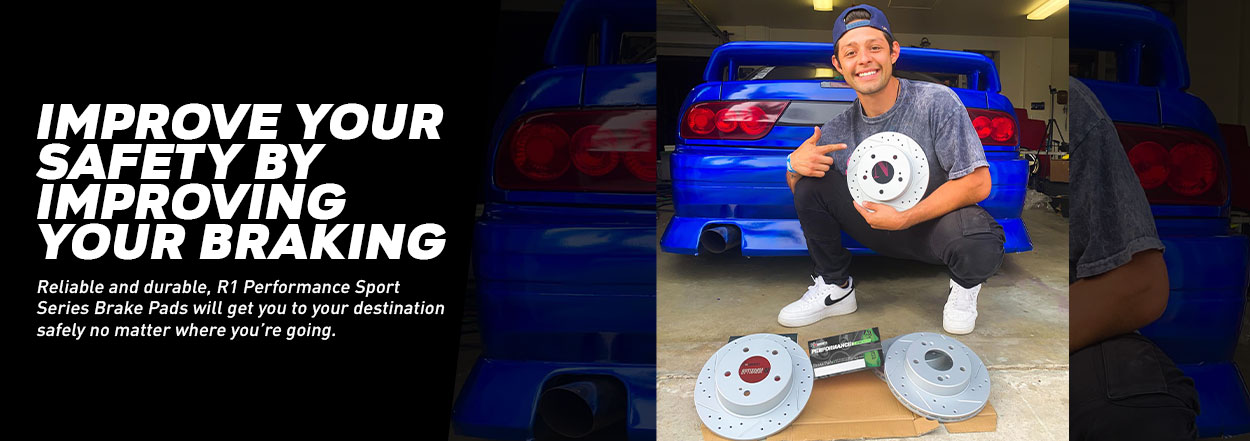
Brake pads must fit your vehicle while handling the conditions you regularly encounter during normal driving. A daily commuter places different braking demands on components than your towing vehicle or performance-oriented car. For lighter daily use, comfort, dust, noise, and cost may carry greater importance in your decision. Heavy vehicles and repeated high-temperature braking require pads designed to tolerate those more demanding operating conditions.
Your rotor choice should follow the same vehicle-specific and use-focused approach when comparing available braking components. Match components to your vehicle and driving conditions instead of choosing designs based primarily on appearance.
Choosing the Right Type for Your Application and Conditions
Consider your environment, vehicle load, braking frequency, and how aggressively you typically use your vehicle’s brakes. Each factor changes how much heat and wear your chosen friction material must manage during operation.
Drivers in ordinary paved-road traffic may prefer quieter compounds that create less visible brake dust overall. Towing, heavier vehicles, rough terrain, or frequent hard stops place greater demands on pads and rotors. R1 PERFORMANCE Off-Road/Tow Series Brake Pads can suit your needs when heavier-duty braking performance is required. R1 PERFORMANCE Sport Series Brake Pads target drivers who regularly place higher performance demands on braking systems.
Keeping Brake Lines and Hoses in Good Condition
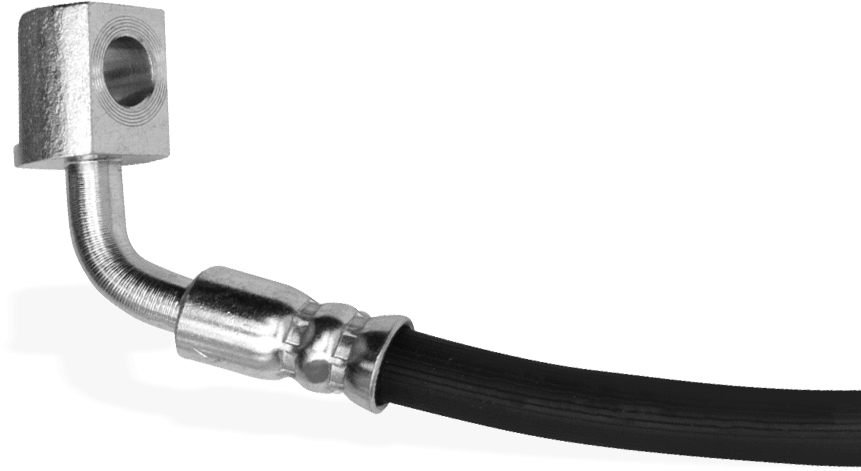
Brake fluid or another contaminant reaching your brake pads can reduce the friction available during braking. A contaminated pad may require replacement even when usable friction material still remains on its surface. Leaks around caliper pistons, seals, hoses, or lines can affect your braking system’s hydraulic performance significantly. Fluid loss can also contaminate friction surfaces when leaking brake fluid reaches your pads or rotors.
Inspection of these areas can help identify leakage, contamination, or deterioration before braking performance becomes affected. Someone properly equipped should evaluate suspected leaks, damaged components, or contamination affecting your vehicle’s braking system.
Things to Consider Before Buying Brake Pads
Brake pad material is only one consideration when you choose replacement components for your braking system. Compatibility, driving conditions, noise, dust, intended use, quality, and price should all influence your decision.
- Type: Compare ceramic, organic, semi metallic, and performance-oriented compounds.
- Compatibility: Confirm that the pad fits your exact vehicle application.
- Quality: Choose brake components from an established product line made for the intended use.
- Price: Balance purchase cost against the features and expected use you actually need.
- Driving conditions: Consider city traffic, highway driving, towing, heavier loads, and performance use.
- Noise and dust: Some compounds naturally create more of either than others.
Could You Change Brake Pads Without Changing Rotors?
Yes, your brake pads can be replaced while existing rotors remain serviceable and within manufacturer specifications. Rotor replacement is not automatically required simply because your vehicle needs a new set of brake pads.
Rotors may need attention when damaged, excessively worn, out of true, or approaching their minimum thickness specification. They should not require machining or replacement simply because your vehicle has reached a particular mileage interval.
Why Consider R1 Concepts Brake Pads?
We offer brake pad options for everyday driving, performance use, towing, heavier loads, and rough terrain. You can compare heat handling, noise, dust, durability, and intended use before choosing your preferred pads.
Shop R1 Concepts brake pads, brake rotors, brake kits, brake calipers and brake drums and shoes.