


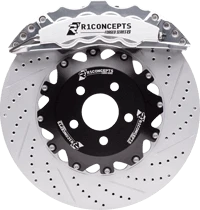

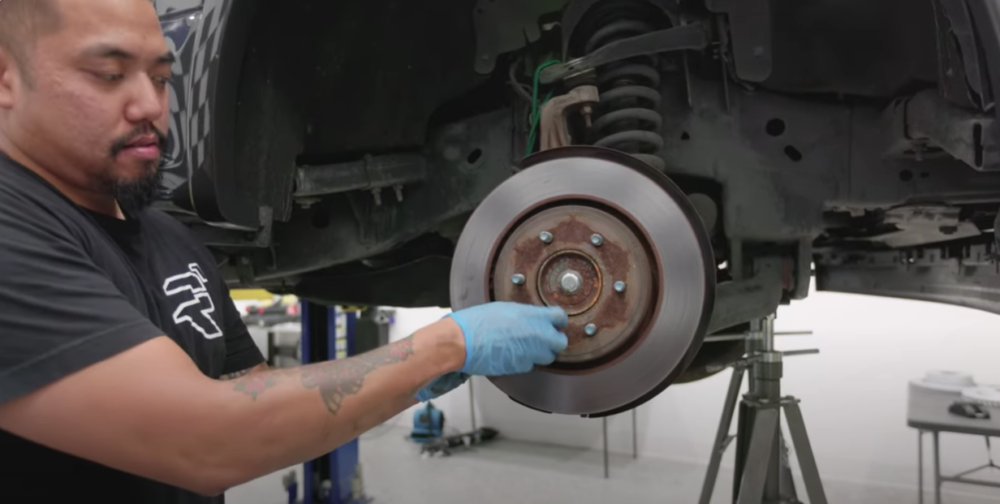
Brake rotors are the discs your brake pads clamp against whenever you press the pedal. That friction slows the wheel while the rotor absorbs and sheds the heat created during braking. A healthy rotor gives the pads a flat, consistent surface to work against. Its condition directly affects pedal feel, stopping consistency, noise, and how smoothly the vehicle slows.
What Are Brake Rotors and How Do They Work?
Brake rotors, also called brake discs, mount at each wheel as part of the braking system. Pressing the brake pedal brings the pads against the rotor surface and creates friction.
Rotors handle several jobs during every stop:
- Heat dissipation: The rotor absorbs and releases heat generated as the pads create friction.
- Friction surface: The rotor gives the brake pads a consistent surface to clamp against.
- Controlled stopping: An even rotor surface supports smooth, predictable braking.
Because the pads and rotors work as a pair, problems with either component can affect braking feel.
Types of Brake Rotors and Their Impact on Performance
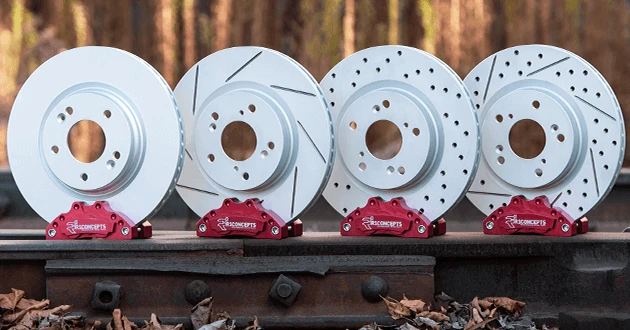
Rotor design changes how the braking surface manages heat, water, dust, and debris. The right choice depends on how and where you drive.
Blank or Smooth Rotors
Blank rotors use a flat, uninterrupted braking surface. They are common on everyday vehicles because they provide consistent braking for city streets and highway driving. R1 Concepts’ eLINE Series Blank Rotors are an option for drivers who want a straightforward replacement for regular commuting.
Drilled Rotors
Drilled rotors have holes through the braking surface. Their design can improve heat management during repeated braking where temperatures rise.
R1 Concepts’ GEO-Carbon Series includes drilled rotor configurations for drivers looking for this type of braking surface.
Slotted Rotors
Slotted rotors use grooves across the rotor face. Those slots sweep gas, dust, water, and debris away from the pad contact area, especially as temperatures increase. R1 Concepts’ eLINE Silver Series includes slotted configurations for drivers who want a grooved rotor surface.
Drilled and Slotted Rotors
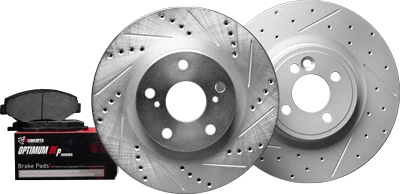
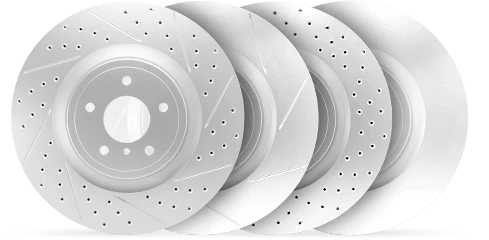
Drilled and slotted rotors combine both surface treatments. They are commonly considered for performance driving or heavier braking where heat and debris management matter more. R1 Concepts’ GEO-Carbon Series Drilled and Slotted Brake Rotors combine both designs in one rotor.
Signs of Worn or Damaged Brake Rotors
Rotor problems usually show themselves through changes in pedal feel, sound, or stopping behavior. Visible surface damage can provide another warning during an inspection.
Watch for symptoms such as:
- Brake pedal or steering wheel vibration while braking
- Squeaking or grinding noises
- Longer stopping distances
- Cracks, deep grooves, heavy corrosion, or other visible surface damage
A pulsing pedal does not usually mean the rotor physically bent or warped. Uneven pad deposits or a rotor sitting against a dirty hub face can create thickness variation that produces the same sensation.
Causes of Worn or Bad Brake Rotors
Normal braking gradually wears rotor material as the pads repeatedly contact the surface. Driving habits and operating conditions can speed up that process. Repeated hard braking or riding the brake pedal creates extra heat. High temperatures can contribute to uneven pad deposits, surface damage, and cracking under severe conditions.
Rust and corrosion can also damage the rotor face, particularly where humidity or road salt is common. Moisture and debris from rain or snow can contribute to surface deterioration over time.
Brake component quality and installation matter as well. Poorly fitted pads or rotors can wear unevenly, while low brake fluid can affect overall braking system operation.
Brake Pedal Pulsing and Rotor Problems
A pulsing brake pedal usually means the pads are not contacting the rotor evenly throughout each rotation. You may also feel vibration through the steering wheel. Uneven pad deposits are one common cause. A dirty hub face can also position the rotor slightly off-axis, creating runout that eventually produces uneven thickness.
Grooves, inconsistent wear, or improper brake component installation can produce similar symptoms. Brake fluid problems may also change pedal behavior, so pulsing should not be diagnosed from one symptom alone.
If the pedal begins pulsing consistently, the braking system should be inspected before wear spreads to other components.
How to Maintain Brake Rotors and Extend Their Lifespan
Rotor life depends on driving habits, vehicle use, component condition, and operating environment. Regular inspections can catch surface damage or uneven wear before braking behavior changes noticeably.
A few habits can reduce unnecessary rotor wear:
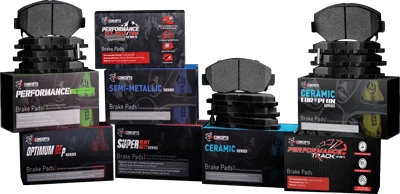
- Use compatible brake pads, including options such as R1 Concepts’ OPTIMUM OEp Series.
- Avoid repeated hard braking when road conditions give you room to slow more gradually.
- Inspect rotor surfaces during routine brake service.
- Replace rotors when wear, damage, or measurements show replacement is needed.
The existing service guidance places typical rotor life between 50,000 and 100,000 kilometers, depending on friction, heat, moisture, vehicle type, driving habits, and rotor quality. R1 GEO-Carbon Series Rotors are another option for drivers considering a different rotor design during replacement.
The Consequences of Driving with Bad Brake Rotors
Damaged or badly worn rotors can reduce braking consistency and increase stopping distance. The effects become more serious when surface damage prevents the pads from maintaining even contact. Rotor problems can also accelerate wear on brake pads and place added stress on calipers. As problems spread through the braking system, repairs can become more extensive.
Severe brake damage may contribute to fluid leaks, contamination, corrosion, or loss of braking performance. Cracked or heavily worn rotors should not be ignored once they are identified.
Poor rotor condition can also create drag or irregular braking behavior that affects how the vehicle drives. Addressing the problem early limits the chance of additional brake component damage.
Why Brake Rotors Matter in Everyday Driving
Every normal stop depends on the contact between your brake pads and rotors. Their condition affects how quickly and smoothly your vehicle responds when you press the pedal.
Well-maintained rotors support:
- Consistent stopping power
- Smooth pedal feel
- Predictable braking during city and highway driving
- Even interaction between the rotor and brake pads
Blank, drilled, slotted, and drilled-and-slotted rotors each serve different driving needs. Choosing the right R1 Concepts rotor starts with how you use the vehicle and what type of braking it sees most often.
Why Consider R1 Concepts Brake Rotors?
We give you several rotor designs suited to different braking conditions, driving habits, and replacement needs. You can choose blank, drilled, slotted, or combined designs based on heat, debris, and everyday braking demands.
Shop R1 Concepts brake pads, brake rotors and brake kits.