



The Chevy Silverado 1500 is one of the hardest-working trucks on American roads. Whether you bought yours for the job site, the boat ramp, or the daily commute, the brakes are the one system that touches every single drive. And if you tow anything heavier than a cooler, your factory brakes are working harder than you might think.
Stock Silverado brakes are built to a cost target. GM designs them to handle average driving conditions for the average buyer. But most Silverado owners aren’t average. You’re pulling trailers, loading beds with building materials, running bigger tires, or just putting on more miles than the engineers planned for. The right brake upgrade changes everything: shorter stops, better pedal feel, less fade on long downhill grades, and genuine confidence when you need to stop now.
This guide covers the best brake pads and rotors for every Silverado 1500 use case, broken down by generation and driving style.
Silverado 1500 Brake Specs by Generation
Getting the right parts starts with knowing what your truck runs. GM changed brake hardware across generations, and even within the same generation, different packages mean different specs. Order the wrong parts and you’re making a return trip.
K2XX Platform (2014-2018 Silverado 1500)
The K2XX Silverado kept brake specs consistent across most trims:
- Front rotors: 330mm (12.99 inches) on most models
- Front rotors (heavy-duty option): 358mm (14.09 inches) on trucks with the Z71 Off-Road Package or Max Trailering Package
- Rear rotors: 330mm (12.99 inches) standard; 365mm (14.37 inches) on Max Trailering trucks
- Lug pattern: 6×139.7mm
- Lug nut torque: 140 ft-lbs
The big variable here is the 358mm front upgrade. If your 2014-2018 Silverado came with the Max Trailering Package, Z71 package, or certain LTZ/High Country trims, you likely have the larger front rotors with dual-piston calipers instead of the single-piston units on base models. Measure your rotors before ordering.
T1XX Platform (2019-2024 Silverado 1500)
GM redesigned the Silverado for 2019, and the brakes got a significant update for the 2022 refresh:
2019-2021:
- Front rotors: 330mm (12.99 inches) standard; 358mm (14.09 inches) with trailering packages
- Rear rotors: 330mm (12.99 inches) standard; 365mm (14.37 inches) with Max Trailering
- Lug pattern: 6×139.7mm
- Lug nut torque: 140 ft-lbs
2022-2024 (Refreshed):
- Front rotors: 340mm (13.39 inches) standard; 358mm (14.09 inches) on LT, RST, LTZ, High Country with tow package
- Rear rotors: 330mm (12.99 inches) standard; 365mm (14.37 inches) with Max Trailering
- Front calipers: Single-piston standard; dual-piston on trucks with 358mm rotors
- Lug pattern: 6×139.7mm
- Lug nut torque: 140 ft-lbs
How to check your setup: Pop the VIN into GM’s parts lookup or check the RPO codes on the sticker inside your glove box. Code JL1 indicates the rear disc brake upgrade. Code NHT is the Max Trailering Package with larger brakes all around.
Silverado ZR2 (2022-2024)
The ZR2 uses 358mm front rotors with performance-tuned calipers designed for off-road recovery stops and high-speed desert running. Rear rotors are 330mm on most models. The ZR2’s multimatic DSSV dampers and off-road focus mean the brakes see more abuse than a typical Silverado, especially during trail descents where you’re modulating speed constantly.
Best Silverado Brake Pads by Driving Style
Your Silverado’s job description determines which pad compound makes the most sense. A ceramic pad that works great on a commuter truck would overheat on a truck pulling a 9,000-pound travel trailer through the Rockies. Here’s what works for each scenario.
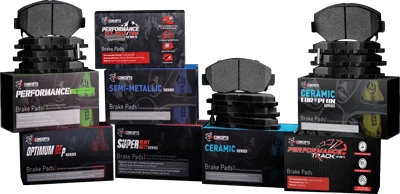
Daily Driving and Commuting: R1 CERAMIC Series
Best for: Work Truck, Custom, LT, and LTZ owners who mostly drive on pavement without regular towing.
The R1 CERAMIC Series pads are the best all-around choice for Silverado owners who don’t tow heavy loads. Ceramic compounds run quieter than semi-metallic alternatives, produce significantly less brake dust, and deliver smooth, linear pedal feel in normal driving.
Dust matters more than you’d think on a Silverado. If you’ve upgraded to aftermarket wheels (especially black or machined-face designs), brake dust shows up fast and looks terrible. Ceramics keep your wheels cleaner between washes.
These pads also tend to outlast semi-metallic options under normal driving conditions, which means fewer brake jobs over the life of your truck. For the average Silverado owner putting on 15,000 to 20,000 miles per year without heavy towing, ceramics are the move. Want a deeper breakdown of pad compounds? Check out our ceramic vs semi-metallic vs organic brake pads guide.
Towing and Hauling: R1 PERFORMANCE Off-Road/Tow or R1 SUPER Heavy Duty
Best for: Trucks that regularly pull trailers, boats, campers, or carry heavy payloads.
If your Silverado tows anything over 5,000 pounds with any regularity, you need pads built for heat. The R1 PERFORMANCE Off-Road/Tow pads use a semi-metallic compound that bites harder than ceramic and maintains that bite as temperatures climb. When you’re descending a mountain grade with a loaded trailer pushing you forward, these pads don’t back off.
The difference between ceramic and semi-metallic under towing conditions is dramatic. Ceramic pads can experience fade at sustained high temperatures, and when you’re hauling, “fade” means your pedal goes long and your stops get longer. That’s not a situation you want with 15,000 pounds of combined weight behind you.
For the heaviest duty work, the R1 SUPER Heavy Duty pads step up further. These are built for trucks working at or near their max tow rating on a regular basis. Think construction trailers, horse trailers, and heavy equipment haulers. The compound handles extreme heat without sacrificing pad life.
Important note: If your Silverado has the base 330mm front brakes (no trailering package), quality pads become even more important. You have less rotor surface area absorbing heat, so the pad compound needs to compensate. Upgrading pads is the single best return-on-investment brake modification for these trucks.
Off-Road and Trail Use: R1 PERFORMANCE Off-Road/Tow
Best for: Z71, Trail Boss, and ZR2 trucks that see dirt, mud, rocks, and steep descents.
Off-road braking is different from street braking. You’re constantly modulating speed on loose surfaces, dealing with contamination from dust, mud, and water crossings, and relying on aggressive initial bite to scrub speed on steep descents. Ceramic pads struggle in these conditions because the compound doesn’t grab as aggressively when cold or contaminated.
The R1 PERFORMANCE Off-Road/Tow pads handle all of it. The semi-metallic compound bites hard even when wet or dirty, recovers quickly after water crossings, and holds up to the repeated heating and cooling cycles that trail driving demands. ZR2 owners especially benefit from this pad because it matches the aggressive driving style that truck was built for.
Performance and Spirited Driving: R1 PERFORMANCE Sport
Best for: RST owners, lowered Silverados, and anyone who drives their truck like they mean it.
The RST package and aftermarket performance builds turn the Silverado into something surprisingly quick. If you’ve added a tune, intake, exhaust, or lowering kit, your stock brake pads are the weak link. The R1 PERFORMANCE Sport pads deliver a firmer pedal feel, stronger initial bite, and consistent performance through repeated hard stops.
These pads operate best in higher temperature ranges, which means they’re ideal for aggressive driving but might feel slightly grabby during gentle around-town driving until they warm up. That’s the nature of a performance compound, and most enthusiasts prefer that feel.
Best Silverado Brake Rotors by Use Case
Pairing the right rotors with your pads completes the upgrade. The rotor’s job is absorbing and dissipating heat. Different designs handle that differently, and the best choice depends on your driving demands.
Stock Replacement: R1 Blank Rotors with Geomet Coating
Best for: Replacing worn factory rotors on daily drivers with no special performance needs.
R1 blank (smooth) rotors match factory specifications and deliver quiet, consistent performance. The key advantage over bare-metal OEM rotors is the Geomet anti-corrosion coating. If your Silverado lives in the Rust Belt, near the coast, or just sits outside, you know how fast uncoated rotors develop ugly rust bloom. Geomet-coated rotors resist that corrosion and maintain a clean appearance.
For daily drivers that don’t tow or see aggressive use, blank rotors paired with R1 CERAMIC Series pads give you a quiet, clean, long-lasting brake setup.
Towing and Heavy-Duty Upgrade: R1 Slotted Rotors
Best for: Trucks that tow regularly and need improved heat management and fade resistance.
Slotted rotors feature machined grooves that serve two purposes: they channel hot gases and pad debris away from the friction surface, and they continuously refresh the pad surface for consistent contact. Both of these benefits directly address the number one towing brake problem, which is fade.
For Silverado owners who tow boats, campers, or equipment, R1 slotted rotors paired with R1 PERFORMANCE Off-Road/Tow or R1 SUPER Heavy Duty pads create a braking system that handles sustained heat without the pedal going soft. The slots do wear pads slightly faster than smooth rotors, but that tradeoff is worth it when you need your brakes to perform at mile 200 of a mountain drive just as well as they did at mile 1.
For more on rotor designs and how they perform, check out our drilled vs slotted vs drilled and slotted rotors comparison.
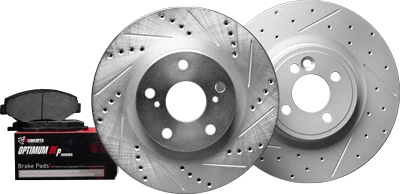
All-Around Performance Upgrade: R1 eLine Drilled and Slotted Rotors
Best for: Owners who want maximum cooling, wet-weather performance, and great looks behind aftermarket wheels.
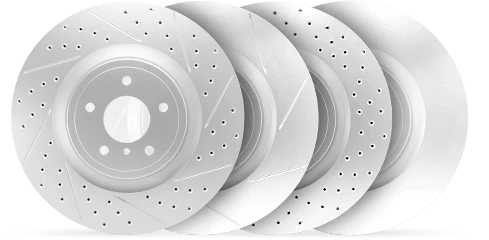
The R1 eLine Series drilled and slotted rotors combine cross-drilled holes for heat venting and water evacuation with machined slots for gas channeling and pad surface maintenance. It’s the best of both designs in one rotor.
Silverado owners running 20-inch or 22-inch aftermarket wheels love these rotors because they look aggressive behind open-spoke designs. But the performance is the real story. The combination of drilling and slotting provides the best heat dissipation available in a direct-fit rotor, which translates to shorter stops, better wet-weather braking, and resistance to fade during mixed-use driving.
Pair eLine rotors with R1 CERAMIC Series pads for a clean, quiet daily setup, or with R1 PERFORMANCE Off-Road/Tow pads for a truck that does everything.
Silverado-Specific Tips
The Trailering Package Brake Difference
This cannot be overstated: the gap between base Silverado brakes and Max Trailering Package brakes is huge. Base trucks run 330mm front rotors with single-piston calipers. Max Trailering trucks get 358mm fronts with dual-piston calipers. That’s nearly an inch more rotor diameter and double the clamping surface area.
If you bought a base or mid-trim Silverado without the trailering package and you tow anything over 5,000 pounds, upgrading your pad and rotor quality is essential. You can’t change the caliper size without major modifications, but you absolutely can install pads and rotors that handle heat far better than the factory parts.
Rust Belt and Coastal Silverados
GM trucks are notorious for brake rotor rust, especially in northern states where road salt is a fact of life. Uncoated rotors on a Silverado can show visible rust within 48 hours of sitting. Beyond cosmetics, excessive rust compromises the rotor surface and can cause vibration and uneven pad wear.
Geomet-coated rotors solve this problem. The zinc-aluminum flake coating protects every exposed surface of the rotor (except the friction face, which stays clean through normal pad contact). For any Silverado that deals with salt, humidity, or extended parking periods, coated rotors are a must.
Running Bigger Tires
Lots of Silverado owners install 33-inch or 35-inch tires for looks or off-road capability. Bigger tires add unsprung weight and increase the effective rolling diameter, both of which make your brakes work harder. If you’ve upsized your tires, upgrading from stock pads to a performance compound helps compensate for the added demands. Your stopping distances with stock brakes and bigger tires are longer than factory specs, and better pads close that gap.
DIY Brake Replacement on a Silverado 1500
Silverados are one of the most DIY-friendly trucks for brake work. The components are accessible, the hardware is straightforward, and you don’t need any special tools beyond the basics.
Key Torque Specs
| Component | Torque |
|---|---|
| Lug nuts | 140 ft-lbs |
| Front caliper bracket bolts | 177 ft-lbs |
| Front caliper guide pin bolts | 31 ft-lbs |
| Rear caliper bracket bolts | 148 ft-lbs |
| Rear caliper guide pin bolts | 25 ft-lbs |
Silverado-Specific DIY Tips
- Caliper slide pins are the usual culprit. If your Silverado is pulling to one side under braking or wearing pads unevenly, sticky caliper slides are almost certainly the cause. Clean and re-grease them every time you do a brake job.
- Check rear drum-in-hat assemblies. Many Silverados (especially 2014-2018 models) use a small drum brake assembly inside the rear rotor hat for the parking brake. Inspect the shoes and hardware while you have the rotors off.
- C-clamp for piston compression. Silverado front calipers use a standard single or dual-piston design that compresses with a basic C-clamp. Rear pistons on some models need to be turned clockwise while compressing. Check your specific model before forcing anything.
- Bed your new brakes. This is the step that separates a good brake job from a great one. Proper bedding transfers an even layer of pad material onto the rotor surface, which is what creates consistent friction and prevents vibration. Follow our brake bedding guide for the full procedure.
For a complete walkthrough of the replacement process, check out our step-by-step brake pad and rotor replacement guide. And if you’re debating whether to DIY or take it to a shop, our brake job cost breakdown lays out the numbers.
Quick Reference: Silverado 1500 Brake Recommendations
| Use Case | Recommended Pads | Recommended Rotors |
|---|---|---|
| Daily driving / commuting | R1 CERAMIC Series | R1 Blank Rotors (Geomet coated) |
| Towing and hauling | R1 PERFORMANCE Off-Road/Tow or R1 SUPER Heavy Duty | R1 Slotted Rotors |
| Off-road / trail use | R1 PERFORMANCE Off-Road/Tow | R1 Slotted Rotors or R1 Drilled and Slotted |
| Performance / RST | R1 PERFORMANCE Sport | R1 eLine Drilled and Slotted Rotors |
| All-around upgrade | R1 CERAMIC Series or R1 PERFORMANCE Off-Road/Tow | R1 eLine Drilled and Slotted Rotors |
Frequently Asked Questions
How long do Chevy Silverado brakes last?
Expect 30,000 to 65,000 miles from factory brake pads depending on driving conditions. Trucks used for towing will hit the lower end of that range (sometimes under 25,000 miles), while highway commuters can stretch past 60,000. Rotors typically last through two sets of pads before needing replacement, but always measure thickness when you swap pads.
What size brakes does my Silverado 1500 have?
It depends on your trim and package. Base trucks typically run 330mm front and rear rotors. Trucks with the Max Trailering Package, Z71, or certain LTZ/High Country trims may have 358mm fronts and 365mm rears with dual-piston front calipers. Check your RPO codes or measure your rotors to confirm.
Are drilled and slotted rotors worth it on a Silverado?
For most owners who mix driving styles (commuting, occasional towing, weekend trips), drilled and slotted rotors are a worthwhile upgrade. They handle heat better than blank rotors, clear water faster in rain, and maintain a fresh pad surface. The only scenario where they’re unnecessary is a strict daily-commuter truck that never tows.
Can I upgrade my Silverado base brakes to Max Trailering specs?
Technically possible but it requires swapping calipers, brackets, rotors, and possibly brake lines. For most owners, the better approach is maximizing the performance of your existing hardware with premium pads and rotors. High-quality components from R1 Concepts on your stock calipers will outperform worn factory parts on the larger setup.
Should I replace pads and rotors at the same time?
Whenever possible, yes. New pads on worn rotors won’t bed properly, leading to uneven friction transfer, vibration, and shorter pad life. If the rotors still have good thickness and a smooth surface, pads alone can work. But if you’re already pulling the wheels off, fresh rotors paired with fresh pads give you the best result and longest service life. Read more in our guide to knowing when your brake pads need replacing.
Do bigger tires affect Silverado braking?
Yes. Larger tires add rotational mass and increase the effective tire diameter, both of which require more braking force to stop. If you’ve gone from stock 265/65R18s to 33-inch or 35-inch tires, expect longer stopping distances with stock brakes. Upgrading to a higher-performance pad compound and slotted or drilled and slotted rotors helps compensate.
Ready to upgrade your Silverado’s stopping power? Shop R1 Concepts brake pads, rotors, and kits matched to your exact truck. Enter your year, make, and model for a guaranteed fit.