



Your brake rotors do something remarkable every time you press the pedal. They convert the kinetic energy of a 4,000-pound vehicle moving at highway speed into heat, then dissipate that heat into the surrounding air. They do this thousands of times between replacements, operating at temperatures that can exceed 1,000 degrees Fahrenheit under hard braking.
Despite all that, most drivers never think about their rotors until something goes wrong. A pulsation in the pedal. A grinding noise. A mechanic telling them it’s time.
This guide covers everything about brake rotors: how they work, the different types available, what materials and coatings matter, how to pick the right ones for your vehicle, and when they need to be replaced. Whether you’re doing a basic pad swap on your daily driver or upgrading the brakes on your weekend track car, understanding your rotors is the first step to getting the braking performance you want.
How Brake Rotors Work
A brake rotor (also called a brake disc) is the flat, circular metal disc mounted to your wheel hub. When you press the brake pedal, hydraulic pressure pushes the brake caliper’s pistons outward, which clamps the brake pads against both sides of the rotor. The friction between pad and rotor surface is what slows you down.
That friction generates heat. A lot of it. During normal city driving, your rotors might reach 300-400 degrees Fahrenheit. Heavy braking from highway speed can push them past 600 degrees. Track driving and aggressive mountain descents can send temperatures well above 900 degrees.
The rotor’s job isn’t just to provide a friction surface. It also has to absorb all that heat and get rid of it before the next braking event. That’s why rotor design, material, and construction all matter so much. A rotor that can’t manage heat effectively will warp, fade, or wear out prematurely.
Solid vs. Vented Rotors
Most modern vehicles use vented rotors on the front axle. A vented rotor is actually two discs connected by internal fins or vanes, with an air gap between them. As the wheel rotates, air flows through those internal channels and carries heat away from the friction surfaces.
The rear axle on many vehicles uses solid (non-vented) rotors. Rear brakes handle significantly less braking force than the fronts (roughly 60-70% of stopping power comes from the front brakes), so solid rotors are adequate for most rear applications.
Some performance vehicles and heavy trucks use vented rotors on all four corners. If your vehicle came with vented rotors from the factory, always replace them with vented rotors. Don’t downgrade to solid.
Types of Brake Rotors
There are four main rotor styles you’ll encounter. Each one has specific advantages depending on how you drive.
Blank (Smooth) Rotors
Blank rotors, also called smooth or plain rotors, have a completely flat friction surface with no holes or grooves. This is what most vehicles come with from the factory, and it’s the most common rotor type on the road.
How they work: The entire surface area contacts the brake pad evenly. No material has been removed from the friction surface, so you get maximum pad-to-rotor contact.
Best for: Daily driving, commuting, general transportation. If your vehicle is a standard sedan, SUV, or truck that sees normal street use, blank rotors are a perfectly solid choice. They’re also the most affordable option.
Limitations: Blank rotors don’t vent gases and debris from the pad-rotor interface as effectively as machined rotors. Under sustained heavy braking, they’re more susceptible to brake fade because hot gases from the pad compound can build up between the pad and rotor surface (a phenomenon called outgassing). For most daily drivers, this is never an issue.
Drilled Rotors
Drilled rotors have a series of holes drilled through the friction surface. The pattern and hole diameter vary by manufacturer and application.
How they work: The holes serve two primary functions. First, they give hot gases from pad outgassing a place to escape rather than building up between the pad and rotor. Second, they provide channels for water and debris to clear from the friction surface, which can improve initial bite in wet conditions.
Best for: Wet-climate daily driving, vehicles where you want slightly improved wet-weather response. The aesthetic appeal is a factor too, since drilled rotors have a distinctive look behind open-spoke wheels.
Limitations: The holes create stress points in the rotor material. Under extreme heat cycling (repeated hard stops from high speed), drilled rotors can develop cracks originating from those holes. This is why you rarely see drilled-only rotors on dedicated race cars. For daily street use, modern drilled rotors from quality manufacturers are engineered to avoid this issue, but it’s worth understanding the trade-off.
Slotted Rotors
Slotted rotors have shallow grooves (slots) machined into the friction surface. The slots typically run from the center toward the outer edge at an angle.
How they work: As the rotor spins, the slots constantly scrape across the pad surface. This does a few things. It sweeps away gas buildup, dust, and debris from the pad-rotor contact area. It also continuously refreshes the pad surface by removing a microscopic layer of spent friction material, which keeps the pad biting on fresh compound.
Best for: Performance driving, towing, hauling, mountain driving, and any situation where your brakes see sustained heavy use. The slot action keeps the pad surface fresh and reduces the gas buildup that causes brake fade. Trucks that tow regularly benefit from slotted rotors because the sustained braking on grades generates conditions where blank rotors are more likely to fade.
Limitations: The slots increase pad wear slightly because they’re constantly scraping the pad surface. You might replace pads 10-15% sooner with slotted rotors compared to blank. For performance and towing applications, that’s a fair trade for the improved braking consistency.
Drilled and Slotted Rotors
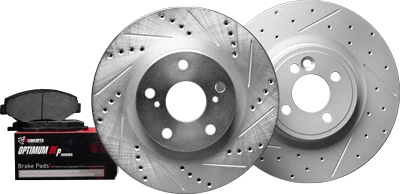
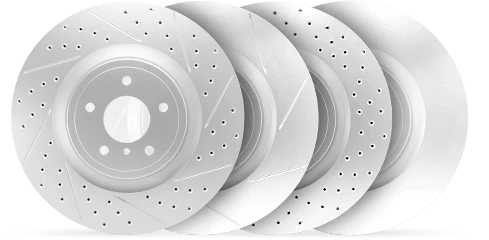
Drilled and slotted rotors combine both features: holes drilled through the surface plus slots machined into it. This is the most popular performance upgrade rotor style.
How they work: You get the gas venting and wet-weather clearing of drilled holes combined with the pad-refreshing and debris-sweeping action of slots. The combination provides the most comprehensive heat and debris management of any rotor style.
Best for: Performance vehicles, spirited driving, upgraded brake setups, and drivers who want maximum braking capability. They’re the most popular choice for enthusiasts who want better braking than stock without going to a full racing setup. They also look the best behind aftermarket wheels.
Limitations: Slightly higher pad wear than blank rotors (from the slots), and they typically cost more than single-feature rotors. For a daily driver that never sees spirited driving, the performance advantage over blank rotors is minimal.
For a deeper comparison of these rotor types with specific recommendations by driving style, check out our detailed drilled vs slotted breakdown.
Rotor Materials
Gray Cast Iron
The vast majority of brake rotors on the road are made from gray cast iron. This isn’t the brittle cast iron of your grandmother’s skillet. Automotive-grade gray iron is a specific alloy engineered for thermal stability, consistent friction performance, and durability.
Gray cast iron works so well for rotors because of its thermal properties. It absorbs heat quickly, distributes it evenly, and dissipates it effectively. It also maintains consistent friction characteristics across a wide temperature range, which means your braking feel stays predictable whether your rotors are cold or hot.
The metallurgy matters. Not all cast iron is created equal. Budget rotors from unknown manufacturers may use lower-grade castings with inconsistent carbon content, porosity issues, or poor internal vane design. Quality rotors from reputable manufacturers use tightly controlled alloys with consistent grain structure throughout the disc.
All R1 Concepts rotors use G3000-grade cast iron, which is the SAE standard for automotive brake rotors. This grade specifies the minimum tensile strength and carbon content required for reliable brake rotor performance.
Carbon Ceramic
Carbon ceramic rotors use a composite of carbon fiber and silicon carbide. You’ll find them as standard equipment on some high-end supercars (Porsche, Ferrari, Lamborghini, Mercedes-AMG) and as an expensive option on performance vehicles.
They’re extremely light (about 50% lighter than cast iron), essentially immune to warping, and they perform consistently at extreme temperatures. They also last far longer than cast iron, often exceeding 100,000 miles.
The downside is cost. A set of carbon ceramic rotors can run $8,000-$15,000 or more. Replacement pads designed for carbon ceramic rotors are also significantly more expensive than standard pads. For the vast majority of drivers, carbon ceramic rotors are overkill.
Two-Piece Rotors
Two-piece rotors use a cast iron friction ring bolted to a separate aluminum hat (the center section that mounts to the hub). The aluminum hat saves weight and improves heat management by isolating the hot friction ring from the hub and wheel bearing.
You’ll see two-piece rotors on high-end big brake kits and some factory performance packages. They’re popular in motorsport because the floating mount allows the friction ring to expand and contract with heat without binding against the hub. This reduces the likelihood of warping under extreme thermal stress.
Two-piece rotors are more expensive than one-piece designs, but they offer real advantages for track use and aggressive performance driving. For daily driving, a quality one-piece rotor is more than adequate.
Rotor Coatings: Why They Matter
A raw cast iron rotor starts rusting almost immediately when exposed to moisture. You’ve seen this: that orange film that covers your rotors after a rainy night. While the friction surfaces get cleaned off every time you brake, the non-friction areas (the hat, the inner vanes, the outer edge) continue to rust over time.
That cosmetic rust isn’t just ugly. It eventually compromises the rotor’s structural integrity. Severe corrosion on the hat area can weaken the mounting surface. Rust on the internal vanes reduces airflow and heat dissipation. And if you live in a region that uses road salt in winter, the corrosion accelerates dramatically.
This is where rotor coatings come in.
Geomet Coating
Geomet is a zinc-aluminum flake coating applied to the non-friction surfaces of the rotor. It provides serious corrosion protection without affecting braking performance.
Unlike paint or powder coat, Geomet is an inorganic coating that bonds at the molecular level. It withstands the extreme temperatures that brake rotors operate at, and it doesn’t peel, chip, or flake off. Geomet-coated rotors resist corrosion significantly better than uncoated rotors, especially in salt-belt regions where winter road treatments attack bare metal.
All R1 Concepts rotors feature Geomet coating on the hat, internal vanes, and outer edge. This is one of the easiest ways to tell a quality rotor from a budget one. If a rotor shows up bare silver with no coating, it’s going to start rusting before you even get it installed.
We cover Geomet coating in detail in our dedicated article: What Is Geomet Coating? Why Coated Rotors Last Longer.
Zinc Plating
Some rotors use an electroplated zinc coating. Zinc plating provides decent short-term corrosion protection and gives the rotor a shiny silver appearance out of the box. It’s less durable than Geomet under high-heat cycling and tends to discolor or burn off in areas near the friction surface.
Zinc-plated rotors are better than uncoated rotors, but they don’t provide the same long-term corrosion resistance as Geomet.
E-Coating (Electrocoat)
E-coating is an epoxy-based coating applied through an electrophoretic process. It provides basic corrosion protection and is commonly used on economy-grade rotors. E-coating tends to burn off at lower temperatures than Geomet or zinc, so you may notice discoloration and exposed metal after a few heat cycles.
How to Choose the Right Brake Rotors
Picking the right rotors comes down to three questions: how you drive, what you drive, and what you’re willing to spend. Here’s a straightforward breakdown.
For Daily Driving and Commuting
Recommended: Blank (smooth) rotors or drilled and slotted rotors with Geomet coating
If your vehicle is a standard sedan, crossover, or SUV that sees normal city and highway driving, blank rotors are a solid and affordable choice. They provide more than enough braking capability for everyday use. The key is to buy quality blanks with proper metallurgy and a corrosion-resistant coating, not the cheapest bare-metal rotors on the shelf.
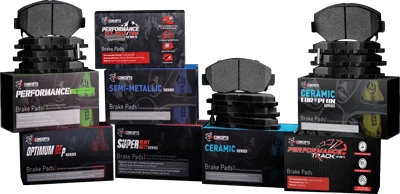
If you want a step up from stock without going full performance, drilled and slotted rotors are a popular upgrade that delivers improved heat management and a more aggressive look. Pair them with a quality ceramic pad like the R1 CERAMIC Series for quiet, low-dust daily driving.
For Towing and Hauling
Recommended: Slotted or drilled and slotted rotors
Towing puts extreme demands on your brakes. The added weight means more kinetic energy to convert into heat, and sustained downhill braking with a trailer can push temperatures into dangerous territory. Slotted rotors keep the pad surface fresh and resist the gas buildup that causes fade under these conditions.
Pair slotted rotors with the R1 OPTIMUM OEp Series pads for strong bite and durability under load, or the R1 PERFORMANCE Off-Road/Tow Series for maximum stopping power with heavy trailers.
For Performance and Spirited Driving
Recommended: Drilled and slotted rotors
If you enjoy canyon roads, autocross, occasional track days, or just driving your car the way it was meant to be driven, drilled and slotted rotors give you the best combination of heat management, consistent bite, and debris clearing. They handle the temperature swings from aggressive stop-and-go driving better than blank rotors.
Match them with the R1 PERFORMANCE Sport Series pads for a great balance of cold bite and high-temp performance, or the R1 PERFORMANCE Track Series if you’re doing dedicated track days.
For Dedicated Track Use
Recommended: Slotted rotors or two-piece slotted rotors
Serious track rotors need to handle sustained high temperatures without cracking. Slotted-only rotors are preferred over drilled for track use because there are no drill holes to act as stress risers under extreme thermal cycling. Two-piece floating rotors are the gold standard for track builds because the aluminum hat allows the friction ring to expand freely.
Pair with the R1 PERFORMANCE Track Series pads, which are formulated for high-temperature operation with strong initial bite.
For Off-Road and Overlanding
Recommended: Slotted or drilled and slotted rotors with Geomet coating
Off-road driving throws mud, dust, sand, and water at your brakes constantly. Slotted rotors help sweep debris from the pad surface and maintain consistent braking in dirty conditions. Geomet coating is especially important here because off-road vehicles are exposed to moisture, creek crossings, and abrasive materials that accelerate corrosion.
The R1 PERFORMANCE Off-Road/Tow Series pads are designed specifically for the demands of trail driving and overland builds.
Rotor Sizing: OE vs. Upgrade
Your vehicle’s factory brake rotors are a specific diameter and thickness, engineered by the manufacturer to match the vehicle’s weight, power, and intended use. When you replace your rotors, you have two options.
OE-Size Replacement
This is the standard approach. You replace your rotors with new ones that match the factory diameter and thickness. This is the correct choice for the vast majority of brake jobs. OE-size rotors fit your existing calipers and brake pad backing plates without any modifications.
When shopping for OE-size replacement rotors, the critical specs to match are:
- Outer diameter (the overall size of the disc)
- Thickness (the measurement across the friction surfaces)
- Hat height (the offset from the mounting surface to the friction surface)
- Bolt pattern (the lug bolt holes, which must match your hub)
- Number of vanes (internal cooling fin count and design)
Quality replacement rotors from R1 Concepts are designed as direct-fit replacements that match every OE dimension. No modifications, no guessing. Enter your vehicle’s year, make, and model on the R1 site and you’ll get the exact rotors your vehicle needs.
Big Brake Kit (BBK) Upgrade
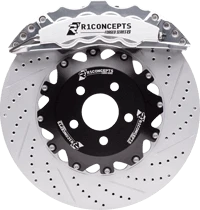
A big brake kit replaces your factory calipers, rotors, pads, and brackets with a larger setup. Bigger rotors mean more surface area, more thermal mass, and better heat dissipation. Bigger calipers with more pistons apply more clamping force. The result is significantly improved stopping power, fade resistance, and brake feel.
BBKs make sense for vehicles that have been modified to make more power, carry more weight, or go faster than stock. They’re also popular for trucks and SUVs that tow at or near their GVWR, and for performance builds where braking confidence matters.
The trade-off is cost and complexity. A quality BBK typically requires a minimum wheel size to clear the larger calipers. Installation is more involved than a standard brake job. And quality BBKs aren’t cheap.
R1 Concepts offers big brake kits for a wide range of vehicles. Check our big brake kit lineup to see what’s available for your platform.
When to Replace Your Brake Rotors
Rotors don’t last forever. Here’s how to know when yours need replacing.
Minimum Thickness
Every rotor has a minimum thickness specification stamped or cast into the hat. This number tells you the thinnest the rotor can be before it no longer has enough thermal mass to safely dissipate braking heat. Operating below minimum thickness risks rotor failure (cracking) and severely compromised braking.
To check your rotors, use a micrometer to measure thickness at several points around the friction surface. If any measurement is at or below the minimum spec, replace the rotor.
Disc Thickness Variation (DTV)
Disc thickness variation means the rotor isn’t the same thickness all the way around. Even a few thousandths of an inch of variation will cause a pulsation in the brake pedal because the pad rides over high and low spots with each revolution.
DTV is often mislabeled as “warped rotors.” True rotor warping (where the disc physically bends) is extremely rare. What most people experience as warping is actually DTV, caused by uneven pad material transfer to the rotor surface. This is almost always the result of improper break-in (bedding). (Learn about proper brake bedding to prevent this.)
Visible Damage
Look at your rotor surfaces. Deep grooves, scoring, or lip formation around the outer edge all indicate a rotor that’s past its service life. Surface scoring from normal pad wear is expected, but grooves you can catch a fingernail in mean the rotor needs to go.
Cracks of any kind mean immediate replacement. Heat checks (tiny hairline surface cracks) on a track rotor are normal, but through-cracks or cracks originating from drill holes are not.
When in Doubt, Replace
Here’s the honest truth: rotors are not the place to cut corners. A quality set of rotors for most vehicles costs $60-$150 per rotor. Running worn, grooved, or thin rotors to save a few bucks compromises your stopping power and causes accelerated pad wear. When you install new pads, inspect your rotors. If there’s any question about their condition, replace them. Your brakes will be quieter, smoother, and more effective with fresh rotors.
For a full breakdown of what a brake job costs (including rotors), check out our brake job cost guide.
How to Make Your Rotors Last Longer
A few habits will significantly extend the life of your brake rotors.
Bed your brakes properly. Every time you install new pads or rotors, perform a proper bedding procedure. This transfers an even layer of pad material onto the rotor surface, which prevents the uneven deposits that cause DTV (the “warped rotor” feeling). Skipping this step is the single biggest reason people have rotor problems. (Read our brake bedding guide for step-by-step instructions.)
Don’t ride the brakes. Sustained light braking generates sustained heat with no cooling breaks. This is what glazes pads and creates the conditions for DTV. On long descents, use engine braking. Apply the brakes firmly to scrub speed, then release and let them cool. Repeat as needed rather than dragging the brakes the entire way down.
Use quality brake pads. Cheap pads with inconsistent friction compounds deposit material unevenly onto the rotor surface. That uneven transfer is a direct path to DTV and premature rotor wear. Quality pads from R1 Concepts use consistent, controlled friction compounds that transfer material evenly during bedding. (Compare pad types to find the right compound for your driving.)
Torque your lug nuts correctly. This sounds unrelated, but it matters. Unevenly torqued lug nuts create uneven clamping pressure on the rotor hat, which can cause the rotor to seat slightly off-center on the hub. That runout creates DTV over time. Always use a torque wrench and tighten in a star pattern to the factory-specified torque value.
Keep your calipers maintained. Sticky caliper slide pins hold the pad against the rotor even when you’re not braking. That constant friction generates heat on one side of the rotor, creating uneven wear and thermal stress. Clean and regrease your slide pins during every brake job.
Rotor Replacement: DIY or Shop?
Replacing brake rotors is a straightforward job that many home mechanics handle without issue. If you can change a tire, you have the basic skills. The process involves removing the wheel, removing the caliper (and hanging it with a wire so it doesn’t strain the brake hose), sliding the old rotor off the hub, and sliding the new one on.
The full process is covered step-by-step in our guide to replacing brake pads and rotors. That guide includes tool lists, safety tips, and everything you need to do the job right.
If you’re not comfortable working on your own brakes, any brake shop can handle the job. Expect to pay $250-$500 per axle for parts and labor with quality rotors and pads. (Full cost breakdown here.)
Frequently Asked Questions
How long do brake rotors last?
Most brake rotors last between 50,000 and 80,000 miles, though this varies widely based on driving style, vehicle weight, rotor quality, and pad compound. Aggressive drivers, heavy vehicles, and vehicles used for towing will see shorter rotor life. Lighter vehicles driven conservatively can sometimes get 100,000+ miles from a set of rotors. The key metric is thickness, not mileage. Measure your rotors and compare to the minimum thickness spec.
Do I need to replace rotors every time I replace brake pads?
Not necessarily. If your rotors are smooth, within spec thickness, and show no signs of DTV or damage, you can install new pads on your existing rotors. That said, if your rotors are grooved, scored, near minimum thickness, or causing pedal pulsation, replace them with the pads. Running new pads on worn rotors is a recipe for noise, vibration, and shortened pad life. (More on this topic.)
Are drilled and slotted rotors worth it?
For performance-oriented drivers, yes. Drilled and slotted rotors provide better heat management, improved wet-weather response, and more consistent braking under hard use. For a standard commuter vehicle that never sees spirited driving, the performance difference over quality blank rotors is minimal. The choice often comes down to how you drive and whether you value the improved look behind your wheels. (Read our full comparison.)
Can warped rotors be resurfaced?
If the rotor has enough material remaining above minimum thickness, resurfacing (also called turning or machining) can remove a thin layer of material to restore a flat, parallel friction surface. However, if the rotor is already near minimum thickness, resurfacing will push it below the safe operating limit. In that case, replacement is the only option. Resurfacing also doesn’t fix the root cause of DTV, which is usually improper bedding. Without proper break-in on the newly surfaced rotor, the problem will return.
What’s the difference between OEM rotors and aftermarket rotors?
OEM rotors are made by (or for) the vehicle manufacturer and come with the car from the factory. Aftermarket rotors are made by third-party companies. Quality aftermarket rotors match or exceed OEM specs in terms of metallurgy, dimensions, and fit. The main advantages of aftermarket rotors are price (often significantly less than dealer parts), variety (drilled, slotted, and coated options that OEM may not offer), and coating options like Geomet that many OEM rotors don’t include.
Why do my new rotors have an oily coating?
New rotors are shipped with a rust-preventive oil coating to protect them during storage and shipping. You need to remove this coating before installation using brake cleaner spray. Wipe the friction surfaces thoroughly with a clean cloth and brake cleaner until no residue remains. Installing a rotor without removing this coating will contaminate your brake pads and severely reduce braking performance.
Ready to upgrade your rotors? R1 Concepts offers Geomet-coated rotors in blank, drilled, slotted, and drilled and slotted configurations for virtually every vehicle on the road. Every R1 rotor is made from G3000-grade cast iron with precision-balanced construction and comes with a Geomet anti-corrosion coating.
Shop R1 Concepts Brake Rotors | Shop Complete Brake Kits | Shop Big Brake Kits