



Drilled vs Slotted vs Drilled and Slotted Rotors: Which Type Is Right for You?
Your brake rotors do more work than most people give them credit for. Every time you press the brake pedal, your pads clamp down on the rotor surface and convert speed into heat. That heat has to go somewhere. How your rotors manage that thermal energy, shed brake dust and gas, and hold up over tens of thousands of miles all comes down to one thing: the rotor design you choose.
Blank rotors, drilled rotors, slotted rotors, drilled and slotted rotors, even dimpled and slotted rotors. Each design handles heat, gas, and debris differently, and each one has real tradeoffs you should know about before you buy.
This guide covers every type of brake rotor, compares the actual performance differences, and helps you pick the best brake rotors for your specific vehicle and driving style. Whether you’re building a weekend track vehicle, upgrading your daily driver, or trying to figure out what to put on your tow rig, you’ll find your answer here.
How Brake Rotors Work (And Why Design Matters)
Before comparing drilled vs slotted rotors, it helps to understand what’s actually happening at the rotor surface during braking.
When your brake pads squeeze the rotor, friction generates heat. A single hard stop from highway speed can push rotor surface temperatures above 900°F. That heat needs to dissipate quickly. If it doesn’t, you get brake fade, which is that spongy, unresponsive pedal feel that happens when your brakes overheat and temporarily lose stopping power.
At the same time, the friction between pad and rotor produces gas and fine debris. The pad material literally outgasses as it heats up. If that gas layer gets trapped between the pad and rotor, it acts like a cushion that reduces friction. Old-school racers called this “green fade,” and it was a real problem with earlier pad compounds.
Modern pad formulations have mostly solved outgassing issues, but the gas and debris still need somewhere to go. That’s where rotor surface design comes in. Holes, slots, and dimples all provide pathways for gas, dust, and water to escape the pad-to-rotor contact area. The specific pattern determines how efficiently that happens, and what tradeoffs you accept in terms of durability, noise, and pad wear.
Blank (Smooth) Rotors: The Baseline
Blank rotors (also called smooth or plain rotors) are exactly what they sound like. A flat, uninterrupted friction surface with no holes, slots, or grooves. This is the design that comes on most vehicles from the factory.
Pros of Blank Rotors
- Maximum structural integrity. No material has been removed from the friction surface, which means blank rotors are the strongest design. They resist cracking better than any other rotor type.
- Longest rotor life. With the full friction surface intact, blank rotors typically last the longest before needing replacement.
- Quietest operation. No slots or holes means no additional noise sources. Blank rotors are the quietest option paired with any pad compound.
- Lowest cost. Simple manufacturing equals a lower price point. Blank rotors are the most affordable option across almost every application.
Cons of Blank Rotors
- Heat dissipation relies entirely on venting. Without surface features to help move hot gas and debris, blank rotors depend on their internal vane structure for cooling. Under hard use, they’re more prone to heat buildup.
- Pad glazing risk. If gas and debris can’t escape the pad-to-rotor interface efficiently, the pad surface can glaze over and lose bite.
- Water evacuation is slower. In wet conditions, a smooth rotor surface holds water longer than a drilled or slotted one. That can mean a slightly longer first-stop distance in rain.
Best For
Budget-friendly daily driving on vehicles that never see hard use. If you drive to work, pick up groceries, and occasionally take a highway trip, blank rotors do the job just fine.
Drilled Rotors: Better Cooling, With a Catch
Drilled rotors have holes bored through the friction surface from front to back. These holes give hot gas, brake dust, and water a direct exit path off the rotor face. The look is immediately recognizable, and drilled rotors have become popular for both performance and aesthetic reasons.
Pros of Drilled Rotors
- Excellent gas and water evacuation. The through-holes let trapped gas escape instantly instead of building up between the pad and rotor. Water gets shed quickly too, which improves wet-weather braking.
- Better heat dissipation. The holes increase the total surface area exposed to airflow, which helps the rotor shed heat faster during normal driving conditions.
- Reduced pad glazing. With gas and debris constantly escaping through the drill holes, the pad surface stays cleaner and maintains better contact with the rotor.
- Visual appeal. Drilled rotors look great behind open-spoke wheels. For a lot of enthusiasts, the appearance alone is worth the upgrade.
Cons of Drilled Rotors
- Stress cracking risk. This is the big one. Each hole is a potential stress point. Under extreme thermal cycling (repeated hard braking that heats the rotor, then rapid cooling), cracks can develop between the holes. For street driving this is rarely an issue, but on a track or during heavy towing, cracking is a real concern.
- Reduced friction surface area. The holes remove material from the braking surface, which means slightly less total contact area between pad and rotor.
- Faster pad wear. The edges of the drill holes act like tiny scrapers on the pad surface with every revolution. Over time, this increases pad consumption compared to a smooth rotor.
Best For
Daily drivers and mild performance vehicles in climates that see regular rain. Drilled rotors shine in wet conditions and light-to-moderate driving. They’re not the best choice for sustained high-heat applications like track days or heavy towing.
Slotted Rotors: The Performance Standard
Slotted rotors have shallow channels (slots) machined into the friction surface. Unlike drilled holes that go through the rotor, slots are surface-level grooves that sweep across the pad face as the rotor spins. This design has been the standard in professional motorsport for decades.
Pros of Slotted Rotors
- Constant pad refresh. The slots scrape a thin layer off the pad surface with each rotation. This sounds bad, but it’s actually beneficial. It removes glazed material and keeps fresh pad compound in contact with the rotor at all times. The result is more consistent friction.
- Superior gas and debris evacuation. The slots act as channels that sweep gas and debris outward, away from the pad contact area. This prevents the gas cushion effect that causes brake fade.
- No stress cracking risk from holes. Since the rotor surface isn’t perforated, slotted rotors maintain their structural integrity even under extreme heat cycling. That’s why you see them on race vehicles.
- Better sustained high-heat performance. Slotted rotors handle repeated hard stops without the cracking concerns that plague drilled rotors under the same conditions.
Cons of Slotted Rotors
- Faster pad wear. Those same slots that keep the pad surface fresh also wear it down faster. Plan on replacing your pads sooner with slotted rotors. How much sooner depends on the slot pattern and your driving, but 10-20% shorter pad life is a reasonable estimate.
- More noise. The slots create a slight humming or whooshing sound during braking. Most drivers get used to it quickly, but if silent braking is your top priority, slotted rotors aren’t ideal.
- Higher cost. The additional machining process makes slotted rotors more expensive than blank rotors.
Best For
Towing, hauling, performance driving, spirited canyon roads, and anyone who values consistent stopping power under heat. Slotted rotors are the go-to for trucks, SUVs, and performance builds that see real use. If you’re comparing drilled vs slotted rotors for a vehicle that works hard, slotted wins on durability every time.
Drilled and Slotted Rotors: The Best of Both Worlds?
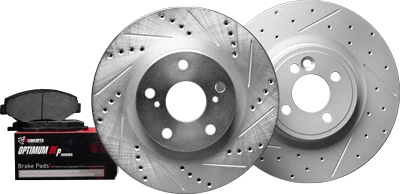
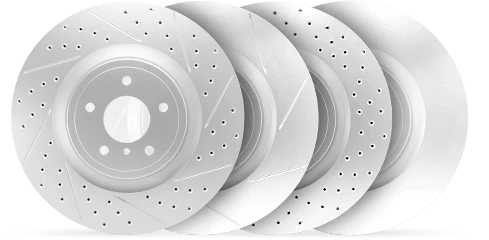
Drilled and slotted rotors combine both features on a single friction surface. You get the through-holes of a drilled rotor plus the machined channels of a slotted rotor. This is the most popular upgrade rotor design in the aftermarket, and for good reason.
Pros of Drilled and Slotted Rotors
- Maximum gas, water, and debris evacuation. Two different escape paths (holes and channels) means the pad-to-rotor interface stays cleaner than any single-feature design. Wet weather braking is excellent.
- Strong heat management. The combination of increased surface area from drilling and the constant pad refresh from slotting gives you a rotor that handles heat well during normal and moderately aggressive driving.
- Great looks. There’s no denying that drilled and slotted rotors are the most visually striking option. Behind a nice set of wheels, they transform the whole appearance of your brake setup.
- Versatile performance. For most people who want better-than-stock braking without going full race-spec, drilled and slotted rotors hit a sweet spot.
Cons of Drilled and Slotted Rotors
- More material removed from the friction surface. Both holes and slots reduce the total braking surface compared to blank or single-feature rotors.
- Still susceptible to stress cracking under extreme use. The drill holes still create stress points. For sustained track abuse or heavy-duty towing in extreme conditions, pure slotted rotors are still the safer bet.
- Fastest pad wear of any rotor type. The combination of drill hole edges and slot scraping means pads wear quickest on this design. Budget for more frequent pad replacements.
- Highest cost. Two machining processes mean a higher price tag.
Best For
Enthusiast daily drivers who want a performance and appearance upgrade without going to a dedicated race rotor. If your vehicle sees spirited driving, occasional towing, and you want your brakes to look great while performing well, drilled and slotted rotors are likely your best match. This is easily the most popular configuration for the “best brake rotors” search, and for good reason.
Dimpled and Slotted Rotors: The Option Nobody Talks About
Here’s a type of brake rotor most comparison articles skip entirely: dimpled and slotted. Instead of drilling holes all the way through the rotor, dimpled rotors use shallow indentations on the friction surface combined with machined slots. Think of it as a middle ground between drilled and slotted and pure slotted.
The dimples provide many of the gas and water evacuation benefits of drilled holes, but because they don’t penetrate through the rotor, they eliminate the stress cracking risk. You still get the slot channels for pad refresh and debris removal.
Why Dimpled and Slotted Rotors Deserve Consideration
- Zero stress cracking risk. The dimples don’t create through-points that concentrate heat stress. This makes dimpled and slotted rotors suitable for everything from daily driving to sustained hard use.
- Better structural integrity than drilled and slotted. Less material removed overall means a stronger rotor.
- Still excellent at clearing gas, water, and debris. The dimples and slots work together to keep the pad contact area clean.
- Unique look. If you’re tired of seeing the same drilled and slotted pattern on every build at a meet, dimpled and slotted rotors stand out.
Best For
Drivers who want the benefits of drilled and slotted without the cracking risk. Track vehicles, heavy tow rigs, and performance builds that see real abuse will appreciate the added durability. It’s the option that gives you almost everything with fewer compromises.
Head-to-Head Rotor Comparison
| Feature | Blank | Drilled | Slotted | Drilled & Slotted | Dimpled & Slotted |
|---|---|---|---|---|---|
| Heat Dissipation | Moderate | Good | Very Good | Very Good | Very Good |
| Wet Weather Braking | Fair | Excellent | Good | Excellent | Very Good |
| Gas/Debris Evacuation | Poor | Good | Excellent | Excellent | Very Good |
| Stress Crack Resistance | Excellent | Fair | Excellent | Fair | Excellent |
| Pad Life Impact | Neutral | Slightly reduced | Reduced 10-20% | Most reduced | Reduced 10-15% |
| Noise Level | Low | Low | Moderate | Moderate | Low-Moderate |
| Rotor Lifespan | Longest | Moderate | Long | Moderate | Long |
| Structural Strength | Highest | Lower | High | Lower | High |
| Visual Appeal | Basic | High | Moderate | Highest | High |
| Cost | $ | $$ | $$ | $$$ | $$-$$$ |
| Best Application | Budget daily | Wet climate daily | Towing, performance | Enthusiast all-rounder | Performance, heavy-duty |
Why Rotor Coatings Matter More Than You Think
Here’s something that gets overlooked in almost every drilled vs slotted rotors article: what’s protecting the rotor surface itself?
Standard brake rotors are cast iron. Cast iron rusts. Fast. If you live anywhere with humidity, rain, road salt, or coastal air, you’ve seen it. Those orange rust patches that show up overnight on bare rotors aren’t just ugly. Surface corrosion creates an uneven braking surface, increases noise, accelerates pad wear, and can even cause vibration.
This is where Geomet coating changes the equation entirely. Geomet is a zinc-aluminum anti-corrosion coating applied to the entire rotor surface. It’s not paint. It’s a sacrificial coating that bonds to the cast iron and protects it from corrosion at a molecular level. Geomet-coated rotors resist rust up to 10x longer than uncoated or standard painted rotors.
Why Geomet Matters for Different Rotor Types
Corrosion protection is important on any rotor, but it matters even more on drilled and slotted designs. Here’s why:
- Drilled rotors have exposed internal surfaces inside each hole. Moisture gets in, sits there, and causes corrosion from the inside out. Geomet coating protects those internal surfaces.
- Slotted rotors have channels where water and debris can pool. Corrosion-resistant coating prevents rust from forming in the slot grooves.
- Vehicles in storage or with low brake use (looking at you, EVs and hybrids) barely use their friction brakes. That means the rotor surface doesn’t get cleaned by regular pad contact, and rust builds up fast. Geomet coating is especially valuable in these situations.
Every R1 Concepts rotor comes with Geomet coating standard. That’s across every configuration: blank, drilled, slotted, drilled and slotted, and dimpled and slotted. It’s one of those details that separates a quality rotor from a commodity part you’ll regret buying in six months.
EV and Hybrid Rotor Considerations
Electric and hybrid vehicles present a unique braking challenge that most rotor comparison content ignores completely. These vehicles use regenerative braking for the majority of their deceleration, which means the friction brakes (your pads and rotors) barely get used during normal driving.
Sounds like that would be great for rotor life, right? Not exactly.
When rotors sit unused, they rust. And because EVs and hybrids rely so heavily on regen braking, the pads don’t scrub the rotor surface clean the way they do on a conventional vehicle. You end up with a layer of surface corrosion that causes noise, vibration, and uneven braking the next time you do need your friction brakes.
For EV and hybrid owners, two things matter most in a rotor:
- Corrosion-resistant coating. Non-negotiable. Uncoated rotors on an EV will look like they’ve been sitting in a junkyard within weeks. Geomet-coated rotors handle this beautifully.
- Slotted or dimpled and slotted design. The slots help keep the pad surface fresh during the limited times the friction brakes do engage. That constant pad refresh prevents glazing, which is a common complaint on EVs with smooth rotors and underused pads.
If you’re building or maintaining an EV or hybrid, a Geomet-coated slotted or dimpled and slotted rotor paired with a low-dust ceramic pad is one of the smartest brake upgrades you can make.
How to Choose the Right Rotor for Your Vehicle
Knowing the pros and cons of each rotor type is useful, but what really matters is matching the design to how you actually drive. Here’s a breakdown by use case.
Daily Driving and Commuting
Best choice: Blank or Drilled rotors
If your vehicle lives on paved roads, never sees a track, and your hardest braking is slowing down for a yellow light, you don’t need aggressive rotor designs. Blank rotors work perfectly for basic commuting. If you want better wet-weather performance and like the look, drilled rotors are a solid upgrade that won’t break the bank. Just make sure whatever you buy has a quality coating to prevent corrosion between your Monday and Friday commutes.
Towing and Hauling
Best choice: Slotted or Dimpled and Slotted rotors
Towing generates serious heat. You’re asking your brakes to repeatedly slow down significantly more weight than the vehicle was designed for on its base brakes. Slotted rotors handle that sustained heat without the cracking risk of drilled rotors. The constant pad refresh from the slots keeps your friction material performing consistently on long downhill grades. Drilled and slotted rotors work too if you’re not towing at the absolute limits, but for dedicated tow rigs, pure slotted or dimpled and slotted is the safer call.
Track Days and Performance Driving
Best choice: Slotted or Dimpled and Slotted rotors
Repeated hard stops from triple-digit speeds is the most punishing thing you can do to a brake system. Drilled rotors crack under these conditions. Slotted rotors handle the thermal stress without issue, and the constant pad refresh keeps your bite consistent lap after lap. Dimpled and slotted rotors give you similar benefits with the added visual appeal. Pair either option with a high-temperature semi-metallic pad for track use.
Off-Road and Overlanding
Best choice: Slotted or Drilled and Slotted rotors
Off-road braking means water crossings, mud, dirt, and debris constantly hitting your rotors. Slotted and drilled and slotted designs shed all of that more effectively than blank rotors. The slots also help clear mud and grit that would otherwise grind your pad surfaces. Corrosion protection is critical here too, since off-road vehicles often sit wet for extended periods.
Show Vehicles and Mild Builds
Best choice: Drilled and Slotted rotors
If the look matters as much as the performance, drilled and slotted rotors are the answer. Throw in a set of color-matched rotor hats (R1 offers 33 color options) and your brake setup becomes a visual centerpiece behind your wheels.
Rotor + Pad Pairing: What Nobody Else Tells You
Picking the right rotor is only half the equation. The pad compound you pair it with determines how the whole system performs. This is a topic that gets zero coverage in most drilled vs slotted rotors comparisons, and it’s arguably just as important as the rotor choice itself.
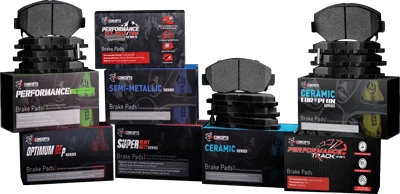
If you haven’t already, check out our full breakdown of ceramic vs semi-metallic vs organic brake pads to understand each compound in detail. Here’s the quick version of what pairs best with each rotor type.
Blank Rotors + Ceramic Pads
The classic daily driver combination. Low dust, low noise, long life on both components. This is what most OEM brake systems are built around, and it works great for commuting and light use.
Drilled Rotors + Ceramic Pads
A step up from blank for daily drivers who want better wet-weather performance. Ceramic pads produce less debris, so the drill holes stay cleaner longer. The lower operating temperatures of ceramic compounds also reduce thermal stress on the drilled holes. Solid pairing.
Slotted Rotors + Semi-Metallic Pads
The performance and heavy-duty combination. Semi-metallic pads handle the higher temperatures that slotted rotors are designed for, and the slots keep the semi-metallic pad surface fresh despite its tendency to produce more debris. This is what you want for towing, hauling, and spirited driving.
Drilled and Slotted Rotors + Ceramic Pads
The enthusiast daily driver sweet spot. You get the visual appeal and gas evacuation of the combined design with the low-dust, low-noise characteristics of ceramic pads. For most people upgrading from stock, this combination delivers the biggest improvement in both performance and appearance.
Dimpled and Slotted Rotors + Semi-Metallic Pads
The high-performance setup without compromise. Dimpled and slotted rotors won’t crack under hard use, and semi-metallic pads deliver maximum bite at elevated temperatures. This is an excellent track day or tow vehicle combination.
Regardless of which rotor and pad combo you choose, proper brake bedding is essential. Bedding transfers an even layer of pad material onto the rotor surface, which is what gives you consistent, smooth braking. Skip this step and you’ll get vibration, noise, and uneven wear from day one.
R1 Concepts Brake Rotor Options
R1 Concepts manufactures every rotor type covered in this guide, all produced in-house at their facility in the LA area. Every R1 rotor comes standard with Geomet coating, which puts them ahead of most competitors selling uncoated or basic-painted rotors.
Here’s what’s available:
R1 Brake Rotors (Standard Line)
Available in blank, drilled, slotted, drilled and slotted, and dimpled and slotted configurations. These are high-quality, Geomet-coated rotors built for daily drivers and light performance use. Solid value for anyone looking to upgrade from worn-out OEM parts.
R1 eLine Series (Performance Line)
The R1 eLine Series is designed for enthusiasts who want maximum performance from their brake setup. Available in all five rotor configurations with premium Geomet coating, plus 33 color options for the rotor hat so you can match your calipers, wheels, or overall build theme. The R1 eLine Series is the go-to for performance builds, show vehicles, and drivers who want their brakes to perform as well as they look.
Both lines cover a massive fitment catalog, so whether you’re working on a Civic, a Silverado, a Mustang, or a 4Runner, R1 likely has a direct-fit option ready to ship.
Frequently Asked Questions
Are drilled and slotted rotors better than regular rotors?
For most drivers upgrading from stock, yes. Drilled and slotted rotors evacuate gas, water, and debris more effectively than blank rotors, which improves braking consistency and wet-weather stopping. The tradeoff is slightly faster pad wear and higher cost. If you drive a performance vehicle, tow, or just want better braking than stock, drilled and slotted rotors are a worthwhile upgrade. For basic commuting on a budget, blank rotors work fine.
Do drilled rotors crack?
They can, but context matters. Under normal street driving conditions, quality drilled rotors rarely crack. The cracking risk increases with repeated extreme thermal cycling, like sustained track use or heavy towing down mountain grades. The through-holes create stress concentration points where cracks initiate. If your vehicle sees heavy brake use, slotted or dimpled and slotted rotors are a more durable choice.
Are slotted rotors noisy?
Slotted rotors produce a slight humming or whooshing sound during braking that blank rotors don’t. Most people describe it as barely noticeable, and it’s not the same thing as brake squeal. The noise comes from the slot edges contacting the pad surface. Pad compound plays a role too. Ceramic pads are quieter than semi-metallic on slotted rotors.
Do drilled and slotted rotors wear pads faster?
Yes. The combination of drill hole edges and slot channels wears brake pads faster than blank rotors. Expect roughly 15-25% shorter pad life compared to running the same compound on smooth rotors. Slotted-only rotors wear pads about 10-20% faster. It’s a tradeoff for better braking performance, and most enthusiasts consider it worth it.
What’s the difference between drilled and dimpled rotors?
Drilled rotors have holes that go all the way through the friction surface. Dimpled rotors have shallow indentations that don’t penetrate through the rotor. Both help with gas and water evacuation, but dimpled rotors maintain more structural integrity because the surface isn’t fully perforated. Dimpled rotors resist stress cracking better than drilled rotors, making them more suitable for high-heat applications.
Are Geomet-coated rotors worth it?
Absolutely. Geomet coating (a zinc-aluminum anti-corrosion treatment) protects the entire rotor from rust, including the internal vanes, hat area, and (on drilled rotors) the inside surfaces of each hole. Uncoated cast iron rotors start rusting within hours of exposure to moisture. Geomet-coated rotors resist corrosion up to 10 times longer. For vehicles in humid climates, coastal areas, or regions with road salt, Geomet coating isn’t a luxury. It’s a necessity.
What type of rotors are best for EVs and hybrids?
Slotted or dimpled and slotted rotors with Geomet coating are the best options for electric and hybrid vehicles. These vehicles use regenerative braking for most deceleration, so the friction brakes get minimal use. That leads to rapid surface corrosion on uncoated rotors. The Geomet coating prevents rust buildup, and the slots help keep the pad surface fresh during the limited times the friction brakes engage.
Upgrade Your Rotors the Right Way
You made it through the full breakdown of every brake rotor type. Now it’s time to pick the right setup for your build.
Here’s the short version: match your rotor design to your actual driving conditions, pair it with the correct pad compound, make sure it’s Geomet-coated so it won’t rust, and always bed your brakes properly after install.
R1 Concepts makes this easy. Every configuration (blank, drilled, slotted, drilled and slotted, dimpled and slotted) is available with Geomet coating, manufactured in-house, and backed by a fitment catalog that covers everything from compact sedans to full-size trucks. The R1 eLine Series takes it further with 33 color options for the rotor hat, so your brakes look as good as they perform.
Shop R1 Concepts Brake Rotors and find the perfect rotor for your vehicle.