



Best Brake Pad Types for Toyota RAV4: Your Guide to Safety and Performance
Toyota RAV4 Brake Pad Types and Key Takeaways

You can choose among three common Toyota RAV4 brake pad types: ceramic, semi-metallic, and organic materials. Each option changes braking feel, noise, dust, heat handling, wear rate, and suitability for demanding driving.
- Ceramic pads suit everyday city driving because you typically get quieter braking and noticeably lower dust.
- Semi-metallic pads handle heat effectively, making them suitable for towing, mountain driving, performance use, and off-roading.
- Organic pads provide smooth, quiet braking, although demanding conditions can cause them to wear considerably faster.
- You should inspect brake pads regularly because squeaking, grinding, vibration, or reduced braking performance can indicate wear.
- Your driving environment matters more than simply choosing whichever brake pad material sounds most performance-focused.
Understanding these differences helps you choose pads matching how you actually use your Toyota RAV4 every day. Your preferred balance between comfort, braking response, cleanliness, and durability should guide your final brake pad choice. Ceramic brake pads produce relatively little dust while delivering smooth, quiet operation during normal street driving conditions. You may prefer ceramic pads if commuting, errands, and urban traffic represent most of your RAV4 driving.
Ceramic compounds also manage normal braking temperatures effectively and commonly provide longer service than softer organic materials. However, you may notice less aggressive initial grip than some semi-metallic compounds, especially during demanding driving. Cold conditions can also affect how some ceramic compounds respond before reaching their normal working temperature range. Your climate, driving habits, vehicle load, and expected braking demands should therefore influence your final selection.
Semi-metallic brake pads contain metal fibers, commonly including steel, iron, and other friction materials bonded with resin. You generally get stronger heat handling and a more aggressive braking response during repeated or demanding stops. That combination makes semi-metallic pads useful for towing, mountain routes, off-road driving, and other higher-stress situations.
You should expect more brake dust and potentially greater noise compared with many ceramic brake pad compounds. Their temperature range makes semi-metallic pads particularly useful where repeated braking continually generates substantial heat at the wheels. However, their harder friction characteristics can create a different pedal feel than quieter street-focused ceramic alternatives.
Organic brake pads commonly use resin with fibers and other softer friction materials instead of high metal content. You can expect relatively quiet operation and smooth engagement, making organic pads suitable for moderate daily driving. Their softer composition usually handles demanding heat less effectively and can increase wear during repeated heavy braking. You may therefore replace organic pads more frequently if your RAV4 regularly carries loads or tackles mountains.
Organic materials are sometimes chosen by drivers seeking lower metal content and comfortable braking during ordinary urban travel. Your usage should remain moderate because frequent hard braking can quickly expose their lower heat and wear tolerance.
Toyota RAV4 Brake Pads for City, Highway, Towing, and Off-Road Driving
Your normal driving environment should influence whether ceramic, semi-metallic, or organic pads best match your Toyota RAV4. Traffic density, vehicle loading, road grades, driving speed, and braking frequency all affect friction material differently. City driving creates repeated stops that can increase brake dust, noise, and heat during everyday commuting. Ceramic pads work particularly well here because their low-dust characteristics help your wheels stay noticeably cleaner.
You may also appreciate their quieter operation when traffic requires frequent braking at intersections, signals, and congested streets. Organic pads can also provide smooth city braking, although frequent stops may accelerate their overall wear rate.
Highway driving places different demands on your brakes, especially during long-distance trips and higher-speed emergency braking situations. Ceramic pads provide consistent everyday response, controlled noise, and useful heat resistance during normal highway travel. Semi-metallic pads can make sense if your highway driving includes heavier loads, steep grades, or repeated braking. Their greater heat tolerance supports drivers who routinely place more demanding thermal loads on their braking system.
Your choice therefore depends on whether you prioritize quiet everyday operation or stronger response under heavier braking demands. Either material can suit highway use when selected correctly for your specific RAV4 configuration and driving habits.
Off-road driving introduces repeated braking, uneven surfaces, vehicle loading, heat buildup, dirt, and changing traction conditions. Semi-metallic compounds generally suit those demands because they tolerate heat and repeated braking better than organic materials. For RAV4 drivers regularly exploring rough terrain, a performance-focused compound can provide more consistent response under repeated braking. Our R1 PERFORMANCE Off-Road/Tow Series Brake Pads are designed around demanding applications involving towing and off-road driving.
Towing similarly increases braking demands because your RAV4 must manage additional load during slowing and repeated stops. You should favor pads designed for greater heat capacity if towing forms a regular part of your driving. Our R1 PERFORMANCE Sport Series Brake Pads can suit drivers wanting stronger street performance during more enthusiastic driving.
Your exact application still matters, so confirm compatibility with your RAV4 year, trim, and braking configuration first.
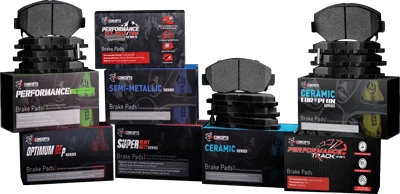
For everyday replacement needs, our R1 OPTIMUM OEp Series Brake Pads focus on balanced braking characteristics for daily driving. We also offer R1 CERAMIC Series Brake Pads for drivers prioritizing low dust and quieter street operation.
Toyota RAV4 Model Year, Fitment, and Current Brake Pad Identification
Your Toyota RAV4 model year affects brake pad fitment because braking configurations can differ between generations and trims. You should verify vehicle details before selecting replacement pads rather than assuming every RAV4 uses identical components. For older RAV4 models built before 2015, select compatible R1 Concepts pads using your exact vehicle configuration. Age alone does not determine the correct compound, because your current driving style should guide material selection.
A pre-2015 RAV4 used mainly for commuting may benefit from ceramic pads providing quieter, cleaner everyday braking. An older RAV4 used for towing or rough roads may instead benefit from a performance-oriented friction compound.
For RAV4 models from 2015 to the present, our R1 OPTIMUM OEp Series provides an everyday replacement option. Our R1 PERFORMANCE Sport Series can suit drivers wanting a more responsive friction compound for enthusiastic street driving. Compatibility should always come first because model year, trim, drivetrain, and factory brake configuration can affect correct fitment. You should confirm those vehicle details before ordering rather than selecting pads from material type alone.
Identifying your current brake pads may require checking service records, previous purchase information, or markings on existing components. A properly equipped automotive professional can also identify installed components and assess overall brake condition during an inspection.
You should not rely only on how your current brakes feel because several components influence braking behavior. Rotor condition, pad wear, tires, brake fluid condition, and operating temperatures can all change what you experience. Mixing ceramic pads on one axle with semi-metallic pads elsewhere can produce different braking characteristics between axles.
You should generally keep matching friction materials across corresponding axle positions for more predictable braking behavior and balance. Replacing pads in proper axle sets also helps maintain consistent friction characteristics between the left and right sides. Your specific braking system should remain correctly matched to your vehicle configuration and intended operating conditions.
Toyota RAV4 Brake Pad Lifespan, Inspection, and Replacement Signs
Toyota RAV4 brake pads commonly last about 30,000 to 70,000 miles, depending heavily on your driving habits. Frequent heavy braking, towing, mountain travel, urban congestion, and aggressive driving can shorten that service range considerably. A driver covering mostly open highway miles may experience different wear than someone navigating stop-and-go traffic daily. Your inspection schedule should therefore reflect actual usage instead of relying completely on a general mileage estimate.
You should consider inspecting brake pad condition every 6,000 to 10,000 miles, or at least once yearly. More frequent checks make sense if you regularly tow, descend steep grades, or drive under demanding conditions.
Brake pads sometimes include wear indicators, slots, or other visible features that help show remaining usable friction material. You should have worn components evaluated before the friction material reaches a point causing rotor contact or damage. Changes in brake dust can sometimes accompany pad wear, although dust levels alone cannot confirm remaining pad condition. You should combine visible inspection with changes in noise, braking feel, and overall stopping performance.
Squeaking can indicate wear, contamination, vibration, or normal friction characteristics, depending on the brake system condition. Persistent new noises deserve inspection, especially when they appear alongside weaker braking response or changing pedal behavior.
Grinding deserves immediate attention because it can indicate severely worn friction material contacting other braking components. Continuing to drive with grinding brakes can damage rotors and reduce predictable braking response during normal stops. Vibration through your brake pedal or steering wheel can also indicate problems requiring proper diagnosis before replacement. Rotor condition, uneven deposits, tire issues, suspension components, or braking hardware may contribute to similar symptoms.
Reduced braking effectiveness should never be treated simply as a reason to purchase a different pad material. You should have the braking system evaluated so the actual cause is identified before selecting replacement components.
Routine care also includes monitoring brake fluid condition and addressing leaks, warning lights, or unusual pedal behavior promptly. Reducing unnecessary vehicle load can lessen braking demand, particularly during repeated stops or driving on steep routes.
Toyota RAV4 Brake Pad Replacement, Rotors, and Service Decisions
Brake pad replacement involves inspecting related braking components and installing correctly matched parts for your specific Toyota RAV4. The work requires someone properly equipped and knowledgeable because braking performance directly affects vehicle control and stopping behavior. You may choose professional service if you lack the equipment, experience, or confidence required for brake work. We supply brake components, while installation decisions should reflect your abilities and access to properly equipped service support.
Professional inspection can also uncover rotor wear, uneven pad wear, sticking components, or other conditions affecting braking performance. Any service warranty comes from the installer involved, unless you are reviewing coverage specifically provided by us.
Rotor condition matters because worn, damaged, overheated, or heavily scored surfaces can affect how replacement pads perform. Machining removes rotor material, leaving the rotor thinner and closer to its required minimum usable thickness. For that reason, we recommend replacing worn rotors rather than machining them during your Toyota RAV4 brake service.
New rotors also provide fresh friction surfaces for properly matched pads during the bedding and break-in process.
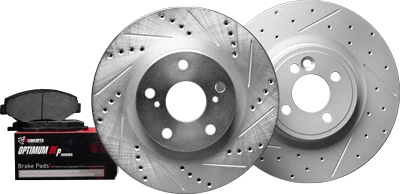
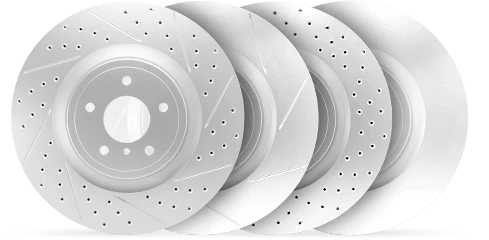
We offer R1 GEO-Carbon Series Drilled & Slotted Brake Rotors for drivers seeking performance-focused braking characteristics and appearance. Our R1 GEO-Carbon Series Blank Brake Rotors provide another option for drivers preferring a conventional blank rotor design. Our R1 eLINE Silver Series Drilled & Slotted Brake Rotors combine drilled and slotted surfaces for compatible applications. We also offer R1 eLINE Black Series Drilled and Slotted Brake Rotors for drivers preferring that finish.
Our R1 eLINE Series Blank Brake Rotors provide a straightforward replacement-style rotor choice for compatible Toyota RAV4 applications. Your rotor selection should match vehicle fitment, driving conditions, pad choice, and the braking characteristics you prefer.
After replacement, proper brake bedding helps transfer friction material evenly and establish consistent pad-to-rotor contact during break-in. You should follow the bedding guidance supplied with your selected R1 Concepts components before demanding repeated heavy braking.
Toyota RAV4 Brake Pad Cost, Value, and Common Questions
Brake pad pricing varies by Toyota RAV4 year, trim, braking configuration, and the specific R1 Concepts product selected. Part price depends on your vehicle, so compare compatible options based on driving needs rather than price alone. Ceramic pads may appeal if low dust, quiet operation, and longer everyday wear matter most to you.
Semi-metallic compounds can justify consideration when towing, mountain driving, off-roading, or repeated hard braking increases heat demands. Organic pads remain another friction category, particularly for lighter everyday use where smooth and quiet operation matters. Their faster wear under demanding conditions can make them less suitable for drivers regularly stressing their brakes.
You should generally expect Toyota RAV4 brake pads to last between 30,000 and 70,000 miles. Actual service life depends on traffic, terrain, towing, braking frequency, driving style, vehicle load, and friction material.
You should avoid mixing different pad types across your vehicle because different compounds can create inconsistent braking characteristics. Matching friction materials across corresponding axle positions helps your RAV4 maintain more predictable braking response during normal use. If squeaking begins, inspect the brakes rather than assuming replacement is automatically required based on noise alone.
Grinding, vibration, weaker braking, or visible wear provide stronger reasons for prompt evaluation by someone properly equipped.
If you are uncertain about replacing pads yourself, professional service may be the more appropriate choice. Brake work requires correct component identification, inspection, fitting, and verification before your vehicle returns to normal driving.
Your best pad type ultimately depends on where you drive and how much braking demand you create. Ceramic suits many commuters, while performance-focused compounds better support towing, off-road use, and harder repeated braking.
R1 Concepts Brake Pads for Your Toyota RAV4
You can choose our R1 OPTIMUM OEp Series or ceramic options for everyday Toyota RAV4 driving. For towing, off-road use, or stronger street response, our performance-focused pad lines address those different braking demands. We also offer matching R1 eLINE and R1 GEO-Carbon rotor choices when worn rotors require replacement.
Your RAV4 year, configuration, driving style, and expected brake temperatures should guide which R1 setup fits best.
Shop R1 Concepts brake pads, brake rotors and brake kits.