




Toyota Camry brake pads generally fall into three categories: ceramic, semi-metallic, and organic for your everyday driving needs. Each type behaves differently when you drive in traffic, on highways, through cold weather, or brake harder. Your best choice depends on how you use your Camry and which braking qualities matter most.
Noise, brake dust, heat resistance, pad life, and driving conditions can all shape your final decision.
Types of Brake Pads for Toyota Camry

Ceramic brake pads favor quiet operation and low dust, helping you keep everyday braking cleaner and quieter. Semi-metallic pads provide stronger bite and better heat resistance, while organic pads generally wear faster during use. None of these materials fits every Camry driver equally well across different routes, conditions, and braking habits.
Your normal routes and braking habits should carry more weight than simply choosing the most expensive pad.
Ceramic Brake Pads
Ceramic brake pads suit you when quiet braking, cleaner wheels, and consistent everyday behavior matter most. They produce lighter, less sticky brake dust than other pad types, helping you keep wheels noticeably cleaner. Ceramic compounds also tolerate high temperatures without breaking down quickly when you encounter demanding braking conditions. Their ability to manage heat can serve you across varied driving conditions, including roads affected by moisture.
Ceramic pads generally cost more than organic options, while their initial bite remains weaker than semi-metallic pads. Extremely cold conditions can expose that difference more clearly when you first apply the brakes firmly.
If you value low noise, lower dust, and consistent everyday behavior, ceramic pads may suit your Camry.
Semi-Metallic Brake Pads
Semi-metallic brake pads use metals such as steel, copper, and iron within their friction material construction. That construction gives you strong braking response and good resistance to heat during harder driving situations.
If you brake aggressively or spend significant time at highway speeds, you may prefer their stronger bite. Semi-metallic pads also resist fade well when temperatures rise during repeated or especially demanding braking situations. You will usually get more noise and brake dust when choosing semi-metallic pads for your Camry. Your wheels may need cleaning more often, while braking can sound harsher than ceramic or organic pads.
If stopping power and heat resistance matter most, you may find those compromises acceptable during demanding driving. Semi-metallic pads are especially suited when your Camry regularly encounters harder braking and demanding road conditions.
Organic Brake Pads
Organic brake pads, also called non-asbestos organic or NAO pads, use rubber, carbon compounds, fibers, and Kevlar. They provide moderate friction while giving you a softer braking material designed around everyday driving conditions. Their softer composition usually produces less noise than semi-metallic pads during your normal daily braking routines.
Organic pads can also create less dust, which may appeal when you mainly drive around cities. That softer material wears faster than ceramic or semi-metallic compounds when you encounter frequent braking situations. If your Camry spends most time in stop-and-go traffic, you may replace organic pads more frequently.
If you prioritize quiet operation, organic pads can remain a practical option for your everyday Camry driving. Their shorter service life remains the main compromise you should consider before choosing organic brake pads.
Choosing the Right Brake Pads for Your Toyota Camry
Start with your driving habits, typical road conditions, and the recommendations provided for your specific Camry. A city commuter asks different things from brake pads than someone regularly traveling at highway speeds.
City driving involves frequent stops, so you should consider how well your chosen pads manage repeated heat. Organic pads can work well here because they provide moderate friction while keeping your braking relatively quiet. Highway driving places greater value on strong initial bite and resistance to fade during harder braking. Semi-metallic pads fit that use well because they handle higher temperatures and harder braking more effectively.
If you drive aggressively, consider pads designed to handle more demanding conditions and repeated harder braking.
In harsh climates, you should also consider resistance to salt and water when comparing brake pad materials. Pads discussed for normal Camry use are not intended for heavy-duty hauling or similarly demanding applications. Those applications can require greater braking pressure to produce the same stopping force under heavier vehicle loads.
You should also consider service life when deciding which brake pad material best matches your driving habits. A longer-lasting pad may reduce how frequently you replace pads while supporting your usual braking requirements.
Frequently Asked Questions
What are the main types of brake pads for Toyota Camry?
The main types you can choose are ceramic, semi-metallic, and organic, also called non-asbestos organic pads. Your driving habits, climate, noise preferences, and braking priorities can help determine which type fits your Camry.
Are ceramic brake pads worth the higher cost?
Ceramic pad pricing depends on your vehicle, but you may value their quieter braking and lighter dust.
They provide consistent behavior across broad temperature conditions, although their initial bite remains lower than semi-metallic pads.
Which brake pads are best for aggressive driving?
Semi-metallic brake pads are generally better suited when you drive aggressively or brake hard more
Why R1 Concepts Brake Pads Fit Your Camry
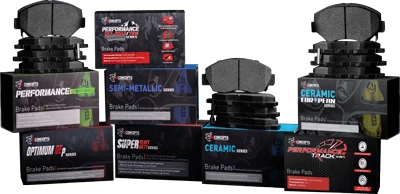
We offer brake pad options that help you match your Camry’s braking feel to your everyday driving. Our ceramic, OE-style, and performance-focused choices give you practical ways to balance dust, noise, bite, and heat.
Shop R1 Concepts brake pads, brake rotors and brake kits.
