





We took the whole R1 squad out to Manassas Meadows with four very different camping setups parked next to each other. One had six years and a full interior build behind it. One was bought on Amazon the week of the trip. Both of them made it out there and both of them worked. That contrast is the whole point of this expensive vs budget camping comparison.
Six Years of Changing His Mind
Johnny from Pure 4×4 brought his 2001 Toyota Sequoia, and he was honest about how it got that way. Six years, and by his own count he has changed everything at least three times figuring out what actually works for him. He started sleeping inside, moved to a rooftop tent, and went back to sleeping inside. The reason is breakdown and setup time, plus the option to pull into a lot on a long drive with blacked out windows and covers and not think about it.
The rig itself is genuinely purpose built. A tilt slide for the fridge, a pull out slide and drawer, a prep station under a pop up cover, a diesel heater, propane running the stove off a single 10 pound tank, traction boards, molle panels and recovery gear. A 180 watt solar panel on the carbon fiber rooftop tent feeds the power station, and a solar charge controller wired to the alternator pulls 400 to 500 watts while he drives.
His Own Advice Was to Not Copy Him
The best moment in the video is when we asked whether all of it was necessary. For someone starting out, he said, none of this is recommended. Do whatever makes it work for you. Asked to cut it down to the essentials, he named wheels and suspension first and called that automatic, then water, the fridge, and something comfortable to sleep on. He also had one instruction for anyone heading out for the first time: do your preventative maintenance before you go. Overhaul the engine, overhaul the transmission, flush every fluid. Out there you may have no cell service and nobody coming to recover you.
The Amazon Special That Worked
Kevin and Ashley came in a Mazda CX-50 with a nine month old. Rooftop tent from Amazon, ground tent, cooler, battery station, chairs, sleeping bags and a water jug, and almost all of it bought for this one trip. Two seats went down, the rear was sagging, and Kevin admitted it was enough space but only just. They brought both tents on purpose. The rooftop tent handles the family, the ground tent gives a nine month old somewhere to crawl around.
That build is the argument against waiting. You do not need a top of the line vehicle to get out there. You need the right people, the right tools and the right mindset, and they had all three.
The Extreme End, and the Minimum
John runs close to the far end of the scale. A pivot shower awning, Starlink for the kids, a clamshell rooftop tent he rates above the many others he has tried because the front opens for headroom, a swing out carrying the spare and recovery gear, a steel table with a cutting board built in, a 3000 watt hour power station, a 200 watt solar panel charging off solar and alternator at once, a two way propane line, and a 3D printed mount he made himself because the fridge was only magnetized on the bottom.
Josh, one of our videographers, went the other way. A cargo box on the roof holding the tent, clothes and solar panel, a 35 quart fridge with protein shakes and fruit in it, a five gallon water jug that covered two showers in three days, and a ground tent that sets up in about four minutes. The trade is length when it is packed. The payoff is less time building camp and more time actually out there.
Rooftop or Ground, and What It Costs You
Rooftop tents keep you off cold ground in a small enclosed space, so a heater runs for less time. The cost is the ladder in the middle of the night and changing on your knees. Ground tents let you stand up and get in and out easily, but they eat space when folded. If you camp with kids and often set up alone, the one you can pitch by yourself usually wins. A hundred dollar tent and thirty five minutes of pole assembly is a worse deal than a three hundred dollar tent that opens in four.
Every One of These Rigs Got Heavier
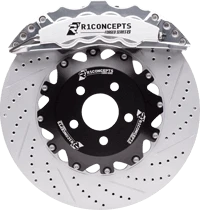
Here is the part that gets skipped. A fridge, a power station, water, a rooftop tent, a steel bumper and a spare on a swing out all add weight, and that weight is carried on the same brakes that left the factory. Johnny put wheels and suspension at the top of his essentials list for a reason, and braking belongs in the same conversation. Loaded down on a fire road descent, stock pads and rotors work harder and get hotter than they ever did on your commute. If your build has grown, look at a brake kit that matches what the vehicle actually weighs now, and bed it in properly before the trip rather than discovering the gap on the trail.
