When we ride a car, we often marvel at the mechanisms that makes it run at a hundred
miles per hour, but think nothing of the
brake system that goes to stop the
car running at such a speed. Though we often tend to forget it and tend to discount
the value of the brilliant
braking system that works against the momentum
of a heavy car to bring it to halt in a matter of a few seconds,
brake rotors are actually a very important part of your car. People who
have ever tried to stop a bicycle without using the brakes know how difficult the
job can be. In fact, the truth of the matter is that the mechanisms that goes beyond
stopping the car is extremely intricate and deserves appreciation. It is a technology
that converts the kinetic energy into heat energy in a safe and secure, imperceptible
manner.
The mechanism that goes behind stopping a car that has a weight in hundreds of kilograms
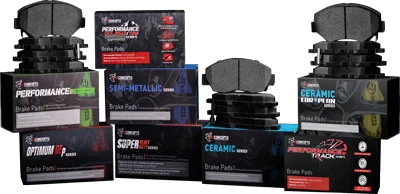
is controlled the brake pads and
brake rotors that look seemingly insignificant
but are actually very efficient. Rotors are the
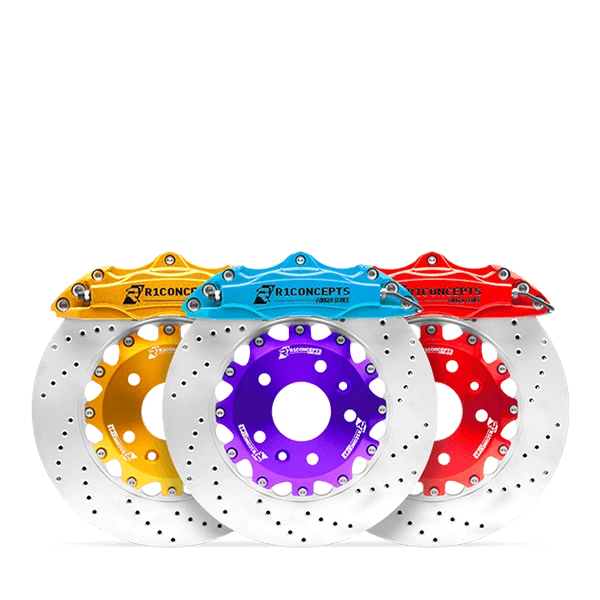
brake discs attached to the wheel with the brake calipers surrounding them.
The
brake pads and the rotors are tightly pressed on to each other, so that
the friction generates an immense amount of heat energy between their surfaces slowing
down the car with every turn of the wheel. These
brake rotors and
brake pads are made of tough resilient material so that they can withstand
an immense amount of heat.
Unlike the materials that were used in the past, several metal alloys are available
in today’s industry that are hardened previously and can withstand thousands of
degrees in temperature. However, for safety reasons and to improve performance of
the braking system as a whole,
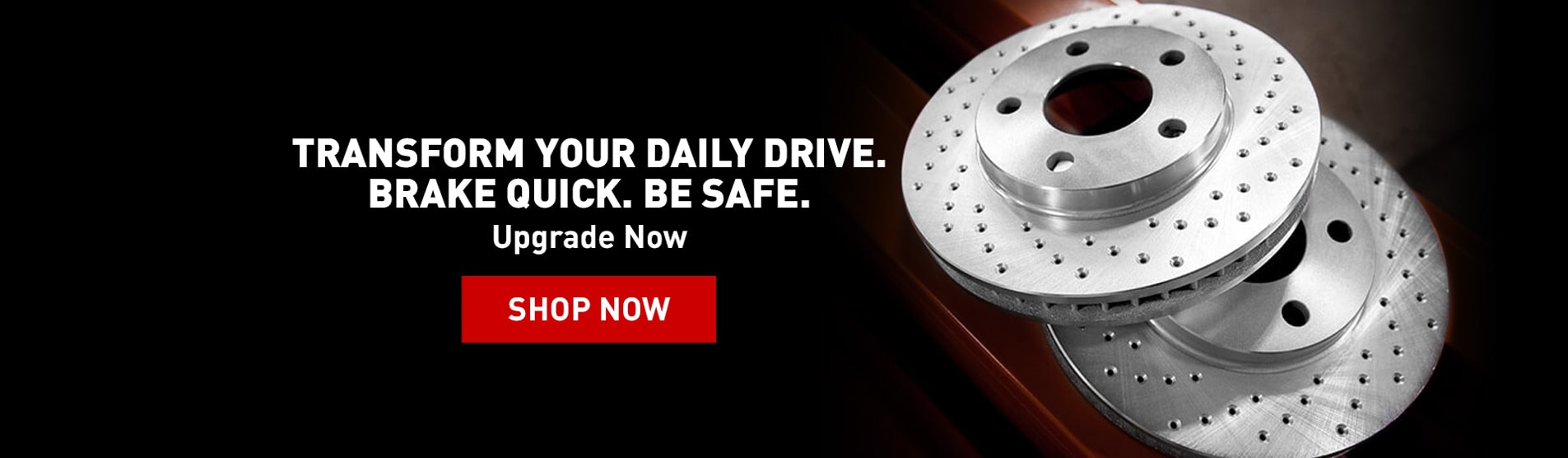
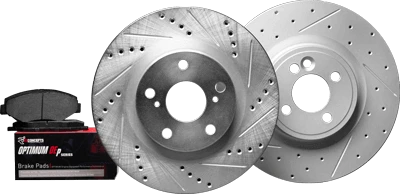
brake rotors are made with slots or holes,
more known as cross drilled and
slotted rotors
that can allow additional pathways for heat to escape from time to time. Particularly,
when cars are driven for long periods of time where heat energy produced between
the rotors and the pads have to be dissipated in some way. These slots and cross
drilled holes help air to pass and the heat to be dissipated gradually.
Depending on the make,
brake rotors consist of two types,
slotted
rotors and
drilled rotors. The first type,
slotted rotors, is popular for used on performance vehicles, where there is a great
need for precision braking. The heat on
slotted rotors is channelled through
the slots. Because there are no holes on
slotted rotors, there is maximum
contact with the
brake pads and friction produced between the surfaces is
greater. On the other hand,
drilled rotorshave holes in them for the dissipation
of heat. They leave gaps in the surface contact area with the
brake pads and are hence, easier on them.